Philosophy has long grappled with questions about existence, consciousness, and the nature of reality. Yet, in our pursuit of understanding, we have overlooked a peculiar and unasked question – What is the shape of a thought in a universe devoid of observers? This question, novel in its framing, invites us to explore the essence of thought itself—its form, its existence, and its potential independence from the minds that typically host it. In this article, I propose an original inquiry into this uncharted territory, weaving together metaphysics, phenomenology, and speculative cosmology to offer a fresh perspective on an unanswered question of philosophy.
The Question Unveiled
To ask about the “shape” of a thought is to probe its fundamental structure or mode of being. We often conceive of thoughts as fleeting, intangible phenomena—mental events bound to a thinking subject. But what if we strip away the subject, the observer, the conscious entity that perceives or generates the thought? In a universe without observers—no humans, no animals, no sentient beings—what form, if any, does a thought take? Does it exist at all, and if so, how might we describe its “shape”—not in a geometric sense, but as a metaphysical or ontological configuration?
This question is distinct from classical philosophical inquiries. It is not about whether a tree falling in a forest makes a sound if no one hears it, nor is it a reformulation of idealism’s concern with mind-dependent reality. Instead, it asks us to imagine thought as a standalone entity, untethered from consciousness, and to speculate on its nature in a cosmos where no one is present to think or perceive. It challenges us to reconsider thought not as a process or product of a mind but as a potential feature of the universe itself.
Framing the Inquiry
To approach this question, we must first clarify what we mean by “thought.” In human experience, thoughts are multifaceted: they can be propositional (e.g., “The sky is blue”), imagistic (a mental picture of a mountain), or emotional (a surge of joy). They are typically private, subjective, and tied to a thinker. But in a universe without observers, we must strip thought of these anthropocentric trappings and consider it in its most abstract form—perhaps as a unit of information, a pattern of relations, or a dynamic process embedded in the fabric of reality.
The “shape” of a thought, in this context, refers to its intrinsic structure or mode of existence. Is it a singular point, a diffuse network, a temporal flow, or something entirely alien to our conceptual frameworks? To explore this, we must venture beyond traditional philosophy and draw on interdisciplinary insights, including physics, information theory, and speculative metaphysics.
A Thought Without a Thinker
Let us imagine a universe at its inception, moments after the Big Bang, before the emergence of life or consciousness. Energy coalesces, particles form, and the laws of physics take hold. Could something akin to a thought exist in this primordial chaos? One might argue that without a mind to host it, thought is impossible. But consider the possibility that thought is not exclusively a product of consciousness. In information theory, for instance, information exists independently of an observer—it is encoded in the arrangement of particles, the spin of electrons, or the entropy of a system. If we define a thought as a structured pattern of information, then the early universe, with its swirling quantum fields and emergent structures, might be teeming with proto-thoughts.
These proto-thoughts would not resemble human cognition. They would lack intentionality, self-awareness, or subjective experience. Yet, they could possess a kind of shape—a configuration defined by their relational properties. For example, the entanglement of particles in quantum mechanics creates correlations that persist across vast distances. Could such correlations constitute the “shape” of a thought, a fleeting nexus of information that exists momentarily before dissolving into the cosmic soup? In this view, the shape of a thought might be a probabilistic, non-local pattern, neither fixed nor permanent, but real nonetheless.
The Role of the Universe as a Canvas
If thoughts can exist without observers, the universe itself becomes their canvas. In a cosmos without sentient beings, the medium for thought might be the physical substrate of reality—fields, particles, or even spacetime. Panpsychism, a philosophical view that posits consciousness as a fundamental property of matter, offers a partial analogy. While panpsychism suggests that all matter has some degree of consciousness, our question requires no such assumption. Instead, we can propose that thought-like structures—patterns of information or relational dynamics—inhere in the universe’s physical processes, independent of consciousness.
Consider a black hole, where information is encoded on its event horizon, according to the holographic principle. This information, compressed into a two-dimensional surface, governs the black hole’s behavior and its interaction with the external universe. Could this encoded information be thought-like, possessing a shape defined by its mathematical structure? If so, the shape of a thought in an observerless universe might be a higher-dimensional configuration, a fractal-like pattern that emerges from the interplay of physical laws.
The Temporal Dimension
Another aspect of a thought’s shape is its temporality. Human thoughts are transient, arising and fading within the stream of consciousness. In an observerless universe, thoughts might also be ephemeral, but their duration could span cosmic timescales. A thought encoded in the cosmic microwave background, for instance, might persist for billions of years, its shape defined by the subtle fluctuations in temperature that ripple across the universe. Alternatively, a thought might be instantaneous, a quantum event that collapses as soon as it forms. The shape of a thought, then, could include its temporal profile—its duration, its rhythm, its place in the unfolding of cosmic history.
Implications for Philosophy
This unasked question forces us to rethink several philosophical assumptions. First, it challenges the anthropocentric bias that ties thought to consciousness. By imagining thoughts as independent entities, we open the door to a more expansive metaphysics, one that sees mind-like properties as woven into the fabric of reality. Second, it invites us to reconsider the nature of existence itself. If thoughts can exist without observers, do they possess a kind of autonomy, a reality as fundamental as matter or energy?
Moreover, this question bridges philosophy and science in a novel way. It suggests that the study of thought’s shape could intersect with cosmology, quantum mechanics, and information theory, offering a new interdisciplinary frontier. For instance, could we develop a mathematical model of a thought’s shape, akin to the wave functions of quantum particles? Such a model might describe thoughts as emergent properties of complex systems, their shapes determined by the underlying dynamics of the universe.
A Speculative Answer
While the question is unanswered—and perhaps unanswerable in a definitive sense—we can offer a speculative response. In a universe without observers, the shape of a thought is a dynamic, relational pattern, a fleeting configuration of information embedded in the physical processes of the cosmos. It is neither mental nor material in the way we understand those terms but exists as a hybrid phenomenon, a ripple in the fabric of reality. Its shape is not fixed but mutable, shaped by the interplay of forces, fields, and structures that define the universe’s evolution.
This answer is not final but an invitation to further inquiry. By asking what the shape of a thought is in an observerless universe, we uncover a new dimension of philosophical exploration—one that stretches our understanding of thought, existence, and the cosmos itself.
Closing Thought
The question of the shape of a thought in a universe without observers is a genuinely new philosophical puzzle, unaddressed by the canons of Western or Eastern thought. It pushes us to imagine thought as a cosmic phenomenon, unbound by the limits of consciousness, and to grapple with its form in a reality devoid of perceivers. While we may never fully grasp the shape of such a thought, the act of asking this question expands the horizons of philosophy, inviting us to see the universe not just as a stage for life and mind but as a vast, enigmatic tapestry of thought-like forms, shimmering in the absence of anyone to witness them.
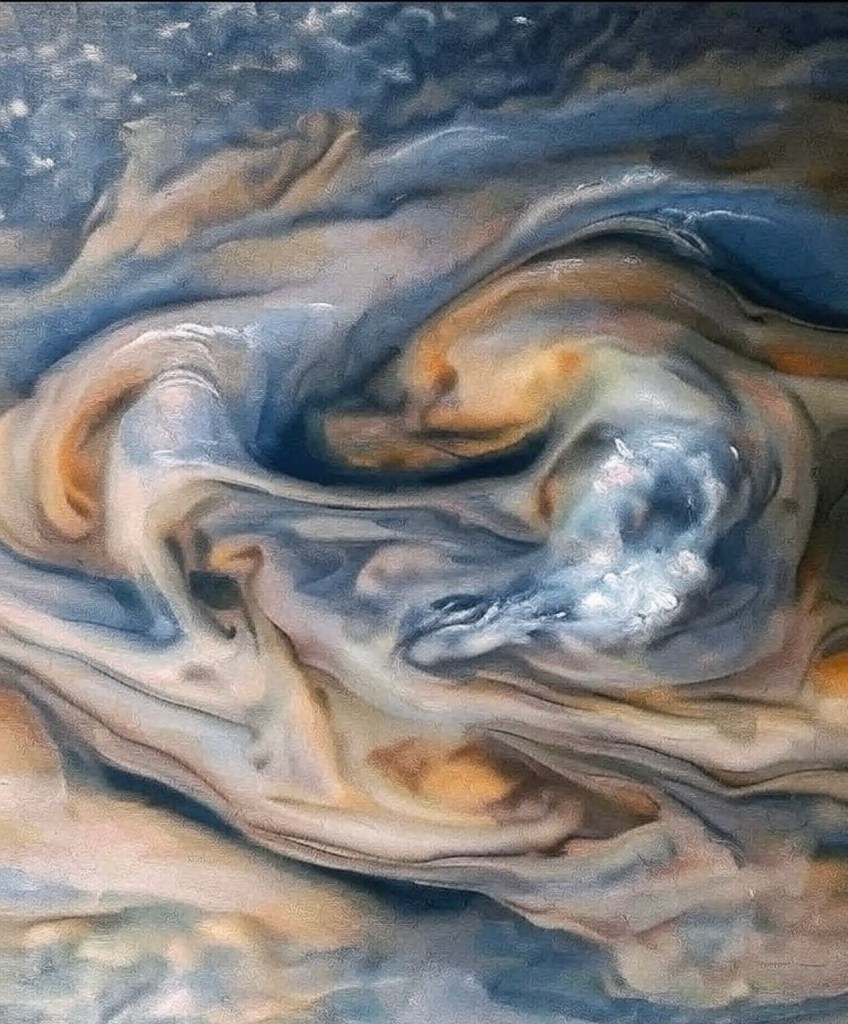
 NeuralRotica