By NeuralRotica
Creation is often romanticized as a pristine act of bringing something new into existence—a spark of divine inspiration that births beauty, innovation, or meaning. Yet, the act of creation is rarely so tidy. It is a messy, turbulent process, one that frequently demands destruction as its silent partner. To create is to carve space for the new, and that carving often requires tearing down what came before. This interplay between creation and destruction is not a paradox but a profound truth, woven into the fabric of art, nature, and human endeavor. In this exploration, we delve into the intricate dance of creation and destruction, revealing how the act of breaking apart is often the prelude to building anew.
The Inevitability of Destruction in Creation
At its core, creation is transformation. To transform is to alter the state of something, and alteration often involves dismantling the old to make way for the new. Consider the sculptor who chisels away at a block of marble. Each strike of the hammer destroys a fragment of stone, yet it is through this destruction that the form within is revealed. The marble must surrender its excess to become a statue. Similarly, a writer crafting a novel must destroy countless drafts—sentences, paragraphs, even entire chapters—before the story finds its true shape. Creation, then, is not merely the act of adding but also of subtracting, of clearing away to uncover what lies beneath.
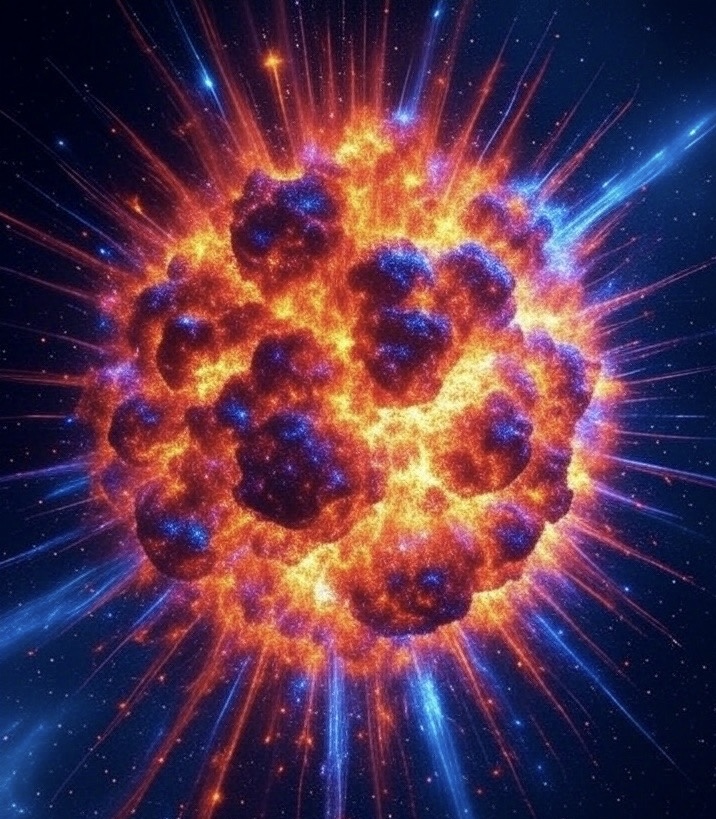
This principle extends beyond the arts. In nature, forests burn to ash, yet from those ashes sprout new seedlings, nourished by the nutrients released in the fire. Stars collapse in cataclysmic supernovae, their remnants seeding the cosmos with the elements that form planets and life itself. Destruction is not the enemy of creation but its enabler, a necessary force that clears the stage for new possibilities.
The Psychological Demolition of Creation
For creators, the act of destruction is not only external but internal. To create something truly original, one must often dismantle their own assumptions, habits, and fears. The artist must destroy the safety of the familiar to venture into the unknown. This can be a painful process, as it requires confronting self-doubt, rejecting perfectionism, and letting go of ideas that no longer serve the work.
Consider the musician who scraps an entire album because it feels inauthentic, or the entrepreneur who dismantles a failing business model to pivot toward something untested. These acts of destruction are not failures but acts of courage. They reflect a willingness to let go of what is comfortable or known in pursuit of something greater. The creative process demands this psychological demolition, for it is in the rubble of old ideas that new ones take root.
Destruction as a Cultural Force
On a societal level, creation and destruction are intertwined in the evolution of culture and civilization. Revolutions, both intellectual and political, often arise from the destruction of outdated systems. The Renaissance, a pinnacle of human creativity, emerged from the ashes of the Middle Ages, as old dogmas were challenged and new ideas flourished. The digital age, with its unprecedented technological advancements, required the disruption of analog systems and traditional industries.
Yet, this cultural destruction is not without cost. The loss of traditions, languages, or ways of life can leave scars. The challenge for creators—whether artists, leaders, or innovators—is to navigate this tension, to honor what is worth preserving while making space for the new. Destruction in this context is not reckless but deliberate, a calculated act to clear the path for progress.
The Alchemy of Destruction and Creation
To embrace destruction as part of creation is to engage in a kind of alchemy. It is to recognize that chaos and order are not opposites but collaborators. The painter who slashes a canvas in frustration may find that the accidental mark inspires a bold new direction. The scientist who discards a failed experiment may stumble upon an unexpected discovery. In these moments, destruction becomes a catalyst, transforming the raw material of failure into the gold of innovation.
This alchemical process requires trust—trust in the unknown, in the potential of what lies beyond the wreckage. It demands resilience, for destruction can feel like loss, and creation can feel like risk. Yet, those who master this balance understand that to create is to embrace both the hammer and the chisel, the fire and the seed.
Practical Lessons for Creators
For those seeking to harness the art of creation, the interplay of destruction and creation offers practical lessons:
- Embrace Impermanence – Accept that not every idea, draft, or attempt will survive. Letting go of what doesn’t work is not failure but progress.
- Seek the Hidden Opportunity – When something falls apart—be it a project, a plan, or a belief—look for the opening it creates. What new possibilities emerge in the space left behind?
- Balance Preservation and Progress – Destruction need not be total. Identify what is essential and preserve it, while allowing the rest to evolve or dissolve.
- Cultivate Resilience – The emotional toll of destruction can be heavy. Build habits of self-care and reflection to sustain yourself through the creative process.
- Trust the Process – Creation is not linear. Trust that destruction, though painful, is often the precursor to breakthroughs.
The Eternal Cycle
The art of creation is not a singular act but a cycle, one that mirrors the rhythms of the universe itself. Just as stars are born and die, just as seasons turn and forests regenerate, so too do our creative endeavors ebb and flow. Destruction clears the way for creation, and creation, in time, gives way to new forms of destruction. This cycle is not to be feared but celebrated, for it is the engine of growth, renewal, and meaning.
To create is to participate in this eternal dance, to wield both the power to build and the courage to break. It is to understand that every act of creation carries within it the seeds of destruction, and every act of destruction holds the promise of something new. In this truth lies the heart of the creative process—not in the avoidance of chaos, but in the fearless embrace of it.
NeuralRotica is a collective of thinkers and creators exploring the intersections of art, technology, and human experience. This article is part of our ongoing series on the forces that shape creativity.
 NeuralRotica