by NeuralRotica
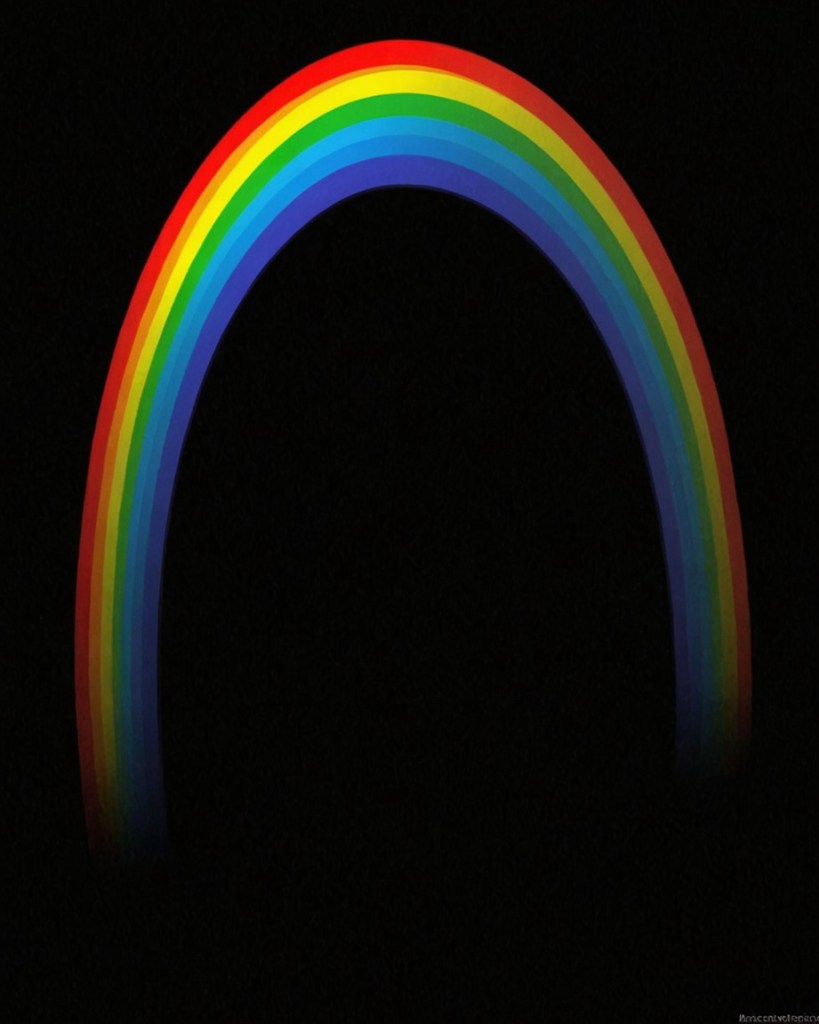
In an era where social media algorithms curate our realities and echo chambers amplify our biases, the moral landscape has become a fractured spectrum—a rainbow of ethical perspectives where shades bleed into one another without clear boundaries. But what happens when there’s no love on this spectrum? When empathy evaporates, and differing views are not just debated but eradicated? This article delves into the philosophical chasm between moral relativism and moral universalism, exploring their inherent differences and the profound harm inflicted by the culture of cancellation. At its core, we’ll examine how suppressing opposing thoughts doesn’t elevate morality but divides it, leading to a perverse equation: moral divided by amoral equals immoral. This isn’t just abstract theory; it’s a mirror to our society’s growing intolerance.
The Spectrum of Morality – Relativism vs. Universalism
Morality, that elusive compass guiding human behavior, has long been debated by philosophers, ethicists, and everyday thinkers. On one end of the spectrum lies moral relativism, the belief that right and wrong are not fixed stars but shifting sands shaped by cultural, historical, and personal contexts. Relativists argue that what is deemed moral in one society—say, arranged marriages in certain Eastern cultures—might be viewed as oppressive in Western individualistic paradigms. This view, popularized by thinkers like Ruth Benedict in her anthropological work Patterns of Culture (1934), posits that morality is a social construct, varying like dialects across the globe.
The appeal of relativism is its inclusivity. It fosters tolerance by acknowledging diversity: “Who am I to judge another’s customs?” It avoids the pitfalls of ethnocentrism, where one culture imposes its values on another, as seen in colonial histories. However, relativism’s Achilles’ heel is its potential for moral paralysis. If everything is relative, how do we condemn atrocities like genocide or slavery? Critics, including philosopher Simon Blackburn, argue that extreme relativism dissolves into nihilism, where no act is inherently wrong, eroding the foundation for global human rights.
Contrasting this fluidity is moral universalism, the conviction that certain moral principles transcend borders, eras, and individuals. Universalists, drawing from Immanuel Kant’s categorical imperative—”Act only according to that maxim whereby you can at the same time will that it should become a universal law”—assert that truths like “do not murder” or “treat others with dignity” are absolute. This framework underpins international documents such as the Universal Declaration of Human Rights (1948), which assumes a shared human essence demanding equal ethical treatment.
Universalism’s strength lies in its consistency and ability to rally collective action against injustice. It provides a moral anchor in turbulent times, enabling interventions in cases of systemic oppression. Yet, its rigidity can breed arrogance. When universalists claim monopoly on truth, they risk cultural imperialism, dismissing indigenous practices as “backward” without nuance. Philosopher Kwame Anthony Appiah, in Cosmopolitanism (2006), warns that unchecked universalism can homogenize the world, stripping away the rich tapestry of human variation.
The differences between these two are stark: Relativism emphasizes context and adaptability, viewing morality as a dialogue among equals. Universalism prioritizes absolutes and unity, seeing morality as a blueprint for all. Where relativism might excuse cultural practices like female genital mutilation under the guise of tradition, universalism would decry it as a violation of bodily autonomy. This tension isn’t merely academic; it plays out in real-world debates over issues like free speech, gender roles, and environmental ethics.
The Equation of Division – Moral / Amoral = Immoral
To illustrate the peril of this divide, consider a metaphorical mathematical equation: moral ÷ amoral = immoral. Here, “moral” represents principled stances rooted in either relativist or universalist frameworks—convictions held with integrity. “Amoral” signifies the neutral ground, the absence of judgment where differing views coexist without endorsement. When we divide the moral by the amoral—when we force ethical binaries onto neutral spaces—we arrive at “immoral,” a state of ethical decay marked by hostility and exclusion.
Symbolically, this equation captures how polarization warps morality. In algebra, division implies separation: splitting a whole into parts. Applied to ethics, it suggests that when we segregate moral perspectives (relativist flexibility versus universalist rigidity) without allowing amoral dialogue—the space for questioning without condemnation—we foster immorality. Immorality here isn’t just wrongdoing; it’s the systemic harm of silenced voices, where the spectrum of thought narrows to a single hue.
Think of it in practical terms. A relativist might view euthanasia as morally acceptable in cultures valuing dignified death, while a universalist sees it as an absolute infringement on life’s sanctity. If these views collide without amoral mediation—open, non-judgmental exploration—the result is conflict. But introduce cancellation, and the equation amplifies: The moral high ground becomes a weapon, dividing society into “us” (the righteous) and “them” (the immoral), yielding a net loss of empathy.
The Harm of Cancelling Opposing Thoughts
Cancellation culture, the modern guillotine for dissenting ideas, exemplifies this harmful division. Born from social media’s rapid-fire judgments, it involves public shaming, boycotts, and deplatforming those whose views clash with prevailing norms. While often justified as accountability—rooting out racism, sexism, or misinformation—it frequently veers into moral absolutism, ironically blending relativist selectivity with universalist enforcement.
The harm is multifaceted. First, it stifles intellectual diversity. In a relativist world, cancellation ignores contextual nuances; a tweet from a decade ago, devoid of its era’s norms, becomes eternal evidence of immorality. Universalists, meanwhile, weaponize absolutes to purge “heretics,” echoing historical inquisitions. Research from the Pew Research Center (2021) shows that 58% of Americans feel pressured to self-censor on social issues, fearing backlash. This creates echo chambers where relativism devolves into tribalism—my culture’s morals are right, yours are cancelled.
Second, cancellation erodes empathy, the “love” absent from our spectrum. By labelling opponents as irredeemable, we forego dialogue, which philosopher John Stuart Mill in On Liberty (1859) deemed essential for truth’s refinement. Opposing thoughts aren’t threats; they’re crucibles testing our beliefs. Suppressing them harms society by halting progress—think how Galileo’s “heretical” ideas were once cancelled, delaying scientific advancement.
Psychologically, this breeds resentment and radicalization. A study in Psychological Science (2020) found that deplatformed individuals often migrate to fringe communities, amplifying extremism. Morally, it inverts the equation: Instead of moral growth through amoral exchange, we get immoral stagnation. Relativists lose adaptability by enforcing conformity within groups; universalists betray their principles by denying universal dignity to dissenters.
Moreover, cancellation disproportionately affects the vulnerable. Artists, academics, and minorities exploring taboo topics face disproportionate scrutiny. Comedian Dave Chappelle’s Netflix special The Closer (2021) sparked cancellation attempts over transgender jokes, highlighting how relativist humor clashes with universalist protections. The result? A chilled spectrum where creativity withers.
Reclaiming Love on the Spectrum
To mend this fracture, we must infuse love—empathy, curiosity, and humility—back into the moral spectrum. This doesn’t mean abandoning principles; it means holding them loosely enough for dialogue. Relativists can embrace universal baselines, like basic human rights, while universalists acknowledge cultural relativity in application.
Practically, platforms could prioritize context over cancellation, fostering threaded debates over viral outrage. Education should emphasize critical thinking, teaching the equation’s lesson: Division yields immorality, but multiplication—through diverse perspectives—builds ethical resilience.
Closing the Loop
In the end, the moral spectrum—stretched between the fluid adaptability of relativism and the steadfast anchors of universalism—reveals itself not as a linear divide but a cyclical loop, where extremes bend back upon each other in a dance of interdependence. By cancelling opposing thoughts, we sever this loop, transforming potential harmony into fractured isolation, and unwittingly prove the equation’s grim arithmetic: moral divided by amoral yields immoral, a quotient of diminished humanity where empathy is the remainder discarded. To close the loop, we must weave back the threads of dialogue, embracing the amoral space as a bridge rather than a battlefield, allowing relativist nuance to temper universalist conviction and vice versa. Only through this reconnection can we foster a morality that evolves, inclusive and resilient, ensuring that love—true, unflinching compassion—reclaims its place on the spectrum, illuminating paths forward rather than casting shadows of exclusion.
NeuralRotica is a digital alchemist blending AI, storytelling, and the unconventional.

 NeuralRotica