You don’t notice the air until you’re gasping. That’s the way it is with the things that matter most—those quiet, steady presences that weave themselves into the fabric of your days. You don’t see them, not really, until they’re gone. And then, oh, how the absence aches.
It’s not something you can name outright. It’s not love or time or even hope, though it might wear their faces. It’s the thing that hums beneath your routines, the unspoken rhythm that keeps you moving forward. It’s the weight of a hand on your shoulder, the sound of laughter spilling from a room you’ve already left, the soft glow of a moment you didn’t know you’d carry forever. You don’t know what it is until it’s gone, and by then, the shape of its absence is all you have left to trace.
I think of mornings. The kind where the world feels gentle, where the light slants just right through the window, and for a fleeting second, everything aligns. You sip your coffee, scroll through the noise of the world, and feel… held. Not by anything grand or profound, but by the smallness of it all—the creak of the floorboards, the warmth of the mug, the way the day hasn’t yet asked too much of you. You don’t think to cherish it. Why would you? It’s just another morning. Until it isn’t.
When it’s gone, you’ll know. You’ll feel it in the hollow of your chest, in the way the silence stretches too long. You’ll look for it in the places it used to be, like a child searching for a lost toy under the couch. You’ll replay the moments you didn’t realize were precious, trying to pin down the exact second it slipped through your fingers. Was it when you stopped listening? When you turned away? When you told yourself there’d be time later?
The truth is, it’s always leaving. Bit by bit, in ways you can’t see until the sum of it is gone. It’s the friend you meant to call but didn’t, the dream you shelved for “someday,” the piece of yourself you traded for something shinier. It’s the way you stopped noticing the stars because the city lights were brighter. And when it’s gone, you’ll realize it was the stars that kept you whole.
But here’s the other truth – its value lingers. Even in its absence, it teaches you. It shows you what mattered, what you took for granted, what you’d give anything to hold again. It’s the ghost that guides you back to yourself, if you let it. You learn to pay attention, to savor the weight of the small things—the brush of a hand, the curve of a smile, the way the world feels when you’re fully in it. You learn to stop waiting for the big moments and start gathering the quiet ones, the ones that slip away if you’re not careful.
I don’t know what “it” is for you. Maybe it’s the way your mother’s voice sounded when she called you home. Maybe it’s the fire you used to feel when you believed in something bigger than yourself. Maybe it’s the version of you that laughed without armor, that loved without fear. Only you’ll know, and only when it’s gone.
So, hold it now. Whatever it is, hold it while it’s still yours. Notice the way it feels, the way it shapes your days, the way it makes you you. Don’t wait for the emptiness to show you its worth. Because when it’s gone, you’ll know—and the knowing will be both a wound and a gift.
NeuralRotica is a collective of storytellers exploring the intersections of human experience and the unseen forces that shape it. This piece was crafted to resonate with the quiet truths we all carry.
Time is a river, flowing without pause, carrying us through moments that vanish as quickly as they arrive. Within this stream, a sliver—0.83% of an hour—holds the power to transform how we live. This fraction, so small yet so potent, is not just a measure of time but a philosophy for infusing every moment with purpose. In this article, we explore how 0.83% becomes a lens for making every second count, guiding us toward a life of intention, presence, and impact.
The Essence of 0.83%
What does 0.83% represent? It is a whisper of time, a fleeting interval that passes in the space of a thought or a glance. Yet, within this brief span lies the potential for profound change. It is the moment when a decision crystallizes, a connection deepens, or an idea sparks. To embrace 0.83% is to recognize that even the smallest portion of an hour can carry immense weight when approached with clarity and purpose.
This percentage is a universal invitation. It exists in the pause before a courageous act, the flicker of inspiration that shifts a perspective, or the quiet choice to listen fully. By centering our focus on 0.83%, we learn to distill life’s vastness into moments of meaning, where every action aligns with our deepest intentions.
Anchoring in the Present
To live within 0.83% requires presence—an unwavering commitment to the now. In an age of endless distractions, where demands pull us in every direction, presence is a defiant act of reclaiming time. It is not merely about noticing the moment but about inhabiting it with full awareness.
The Practice of Fleeting Focus
Fleeting focus is the art of grounding ourselves in the brief expanse of 0.83%. It begins with a single, deliberate act: feeling the weight of a pen in your hand, tracing the rhythm of your breath, or catching the fleeting scent of rain. These tiny anchors tether us to the present, proving that even a fraction of an hour can be a portal to mindfulness.
Try this: for the duration of 0.83%, pause and observe. What do you sense? The hum of a nearby conversation, the warmth of sunlight on your skin, or the pulse of a passing thought? This exercise, though brief, builds a habit of presence, teaching us to weave awareness into the fabric of our days.
The Strength of Stillness
Stillness is not inaction; it is a purposeful pause that amplifies intention. Within 0.83%, you can halt a reactive impulse, reframe a challenging moment, or realign with your core values. This pause is a quiet revolution, choosing deliberation over haste.
Picture a tense exchange or a pivotal choice. In the span of 0.83%, you can breathe, reflect, and shift from instinct to insight. This minuscule interval becomes a pivot point, turning fleeting moments into opportunities for growth and clarity.
Shaping Time Through Intention
Making every second count is not just about presence—it demands action. The philosophy of 0.83% is an active engagement with time, where each moment becomes a canvas for creation, connection, or transformation.
The Power of Incremental Acts
Great outcomes are built on small, intentional steps. In 0.83% of an hour, you can write a single line, offer a gesture of kindness, or take the first step toward a dream. These micro-acts ripple outward, creating waves of change that grow with time.
Consider the artist who, in 0.83%, sketches a single stroke. That stroke becomes a drawing, then a masterpiece. Or the colleague who, in a brief moment, shares an encouraging word that shifts a team’s momentum. The strength of 0.83% lies in its ability to turn small choices into enduring impact.
Redefining Impact
Conventional measures of impact often prioritize quantity—how much can be done in an hour. The 0.83% philosophy redefines this by valuing quality and intention. Impact is not about filling time but about ensuring each moment serves a purpose.
For instance, dedicating 0.83% to listen attentively to a friend may seem minor, but it fosters trust and understanding. Similarly, using that time to visualize a goal can sharpen your focus. By measuring impact through alignment with purpose, we unlock the potential of every second.
Navigating Barriers to 0.83%
Living the 0.83% philosophy is not without obstacles. Doubt, distraction, and the pressure to keep pace with a relentless world can dim our ability to make every second count. Yet, these challenges can be met with resilience and strategy.
Quieting the Voice of Doubt
Doubt often whispers that small moments are insignificant, that 0.83% cannot matter. To counter this, we must reframe our thinking. Every moment is a seed, capable of growing into something extraordinary. When doubt arises, remind yourself that 0.83% is enough to start, to act, to matter.
Taming Distraction
Distraction fragments our focus, pulling us away from the present. To reclaim 0.83%, create intentional boundaries. For that brief span, set aside devices, silence notifications, or simply close your eyes. These micro-resets restore your attention, allowing you to reengage with purpose.
Defying the Urge to Hurry
The modern world equates speed with success, but the 0.83% philosophy prioritizes depth. When the urge to rush surfaces, use 0.83% to ask: What truly matters in this moment? This question grounds you in intention, ensuring your actions reflect your priorities.
The Lasting Echoes of 0.83%
What does it mean to live a life where every second counts? It is not about perfection or constant productivity but about crafting a life rich with purpose and connection. The legacy of 0.83% is found in the quiet, consistent choices that shape who we become and how we inspire others.
Crafting a Purposeful Existence
Each choice within 0.83% is a thread in the fabric of your life. Whether it’s a moment of compassion, a burst of creativity, or a pause to reflect, these threads weave a pattern of meaning. Over time, they create a life defined by intention, resilience, and joy.
Sparking a Chain Reaction
Living with 0.83% in mind is infectious. When you make every second count, you encourage others to do the same. A single act in 0.83%—a smile, a shared idea, or a moment of genuine presence—can ripple through a community, inspiring others to live with greater intention.
Closing Thought – Seizing the Power of Now
The philosophy of 0.83% is a call to live with such clarity and purpose that every moment becomes a catalyst for change. It reminds us that time, though fleeting, is ours to shape. By cultivating presence, acting with intention, and overcoming barriers, we can transform even the smallest fraction of an hour into a cornerstone of a meaningful life.
So, take 0.83% of this hour. What will you do with it? Listen, create, connect, or dream—whatever you choose, make it count. For in that brief span lies the power to redefine your life, one moment at a time.
NeuralRotica is a collective dedicated to exploring the intersection of time, purpose, and human potential. Join us in making every second count.
Efficiency often feels like the holy grail of productivity, a shimmering promise of more output in less time. Yet, beneath the allure of checking tasks off a list lies a deeper question: is it enough to get things done, or should the focus shift toward getting things done correctly? The distinction between these two approaches shapes not only personal success but also the quality of outcomes in professional and creative endeavors. This exploration delves into the philosophy of efficiency, weighing the merits of rapid task completion against the precision of thoughtful execution, and offers a framework for harmonizing the two.
The drive to get things done fuels much of modern productivity culture. Systems like task batching, time blocking, or rapid prioritization thrive on the principle of momentum. The satisfaction of crossing off items feels tangible, a measurable victory in a world that often demands constant progress. This approach prioritizes volume and speed, celebrating the ability to juggle multiple responsibilities and keep the wheels turning. For many, it’s a survival mechanism – whether managing a startup, parenting, or navigating a demanding career, the ability to churn through tasks can feel like the only way to stay afloat.
The Hidden Cost of Haste
However, this relentless focus on output can obscure a critical flaw – not all tasks are created equal. A dozen emails sent in a frenzy may clear an inbox but leave misunderstandings unresolved. A project rushed to completion might meet a deadline yet fail to deliver lasting value. The cost of prioritizing speed over substance often reveals itself later – rework, missed opportunities, or diminished trust. Getting things done, while seductive in its immediacy, risks becoming a hollow pursuit if the results lack depth or durability.
The Case for Doing Things Correctly
In contrast, getting things done correctly emphasizes precision, intention, and alignment with long-term goals. This approach values the quality of execution over the quantity of tasks completed. A single, well-crafted proposal that secures a client’s trust outweighs a flurry of half-baked pitches. A carefully considered decision, grounded in data and foresight, prevents the need for costly corrections down the line. The mindset of correctness demands patience, a willingness to pause and reflect before acting. It requires asking uncomfortable questions: Does this task matter? Am I solving the right problem? Will this effort stand the test of time?
The Perils of Perfectionism
Yet, the pursuit of perfection can paralyze. Overthinking every detail or endlessly refining a single task can stall progress just as surely as reckless haste. The danger lies in mistaking thoroughness for indecision, where the fear of imperfection prevents any forward movement. Striking a balance between speed and precision becomes the true art of efficiency – a dynamic interplay that adapts to context and purpose.
Finding the Balance
Consider the creative process. A writer dashing off a first draft might produce pages quickly, but without revision, the work remains raw and unpolished. Conversely, a writer obsessed with perfecting every sentence may never finish the manuscript. The most effective creators blend the two: they generate with abandon, then refine with care. This rhythm – action followed by evaluation – mirrors the broader challenge of efficiency. It’s not about choosing between doing things quickly or doing them well but about knowing when to lean into one and when to pivot to the other.
Efficiency in Practice
In professional settings, this balance becomes even more critical. A software developer, for instance, might push out code rapidly to meet a sprint deadline, but untested features can lead to bugs that erode user trust. Alternatively, over-engineering a solution might delay a product launch, allowing competitors to seize the market. The most successful teams operate with a dual mindset: they move swiftly to build, then rigorously test and iterate. They recognize that efficiency isn’t a straight line but a cycle of creation and refinement.
A Framework for Thoughtful Efficiency
How, then, can this balance be achieved? The first step lies in clarity of purpose. Before diving into a task, define what “correct” means in that context. Is the goal to produce a functional prototype or a polished final product? Is the priority meeting a deadline or building something enduring? Clear intent acts as a compass, guiding decisions about where to invest time and energy. Without it, efforts scatter, and efficiency becomes a synonym for busyness.
Next, embrace the power of iteration. Rarely does a task demand perfection on the first try. Instead of aiming for flawless execution upfront, focus on creating a solid foundation that can be improved. This mindset allows for speed without sacrificing quality. A marketing campaign, for example, might launch with a minimal viable strategy, then evolve based on audience feedback. Iteration transforms mistakes into learning opportunities, ensuring that “done” gradually becomes “done correctly.”
Finally, cultivate self-awareness. Efficiency thrives on understanding personal strengths and limits. Some individuals excel at rapid task execution, while others naturally gravitate toward meticulous detail. Recognizing these tendencies allows for better task allocation in teams and smarter time management for individuals. Tools like time audits or reflective journaling can reveal patterns – where time is wasted, where haste undermines quality, or where overthinking stalls progress. Armed with this insight, adjustments become possible, aligning effort with impact.
Toward a New Definition of Efficiency
The tension between getting things done and getting things done correctly is not a dichotomy to resolve but a spectrum to navigate. Both approaches have their place, and mastery lies in knowing when to sprint and when to pause. Efficiency, at its core, is not about doing more but about doing what matters most, in the way that matters most. By blending the urgency of action with the wisdom of precision, true productivity emerges – not as a frantic race against time, but as a deliberate craft that yields results worth celebrating.
In the quiet hum of our hyper-connected world, where algorithms paint galaxies and neural networks compose symphonies, a question lingers like an unpainted stroke on a digital canvas: *What is the true purpose of art in a world increasingly dominated by technology and artificial intelligence?* It is a query we dare not ask, for it threatens to unravel the fragile threads of meaning we’ve woven around creativity. Yet, in the shadow of this silence, the question grows louder, demanding we confront the essence of art and its place in a future where the human hand may no longer hold the brush.
The Ghost in the Machine
Art has always been a mirror to the human soul—a defiant act of meaning-making in the face of chaos. From the ochre-stained caves of Lascaux to the pixelated dreams of virtual reality, it has served as a vessel for our fears, joys, and unanswerable questions. But today, as artificial intelligence crafts photorealistic portraits in seconds and generative models spin narratives that rival Dostoevsky, the mirror begins to reflect something else: a machine that mimics, iterates, and, some argue, creates.
Consider the rise of AI-driven art platforms—tools like DALL·E 5, Midjourney X, or the open-source *Artifex* engine. These systems, trained on vast datasets of human creativity, produce works that captivate galleries and collectors alike. In 2024, an AI-generated piece, *Ethereal Recursive*, sold at Sotheby’s for $3.2 million, sparking heated debates over authorship. Was the artist the programmer who designed the algorithm, the dataset of human works that fed it, or the machine itself, which wove novel patterns from the chaos of code? Critics called it a triumph; purists called it theft. Yet no one asked: *Why do we need art at all when a machine can do it faster, cheaper, and, arguably, better?*
The unasked question reveals a deeper unease. If art is no longer a uniquely human act, does it lose its purpose? Or does its purpose evolve into something we have yet to name?
The Purpose of Art – A Shifting Constellation
To grapple with this, we must first revisit what art has meant across time. For the Romantics, it was a sublime expression of the divine within the human. For the Dadaists, it was a rebellion against meaning itself. In indigenous cultures, art often served as a bridge to the spiritual, a way to commune with ancestors or the land. In each case, art’s purpose was tied to human experience—its messiness, its mortality, its search for transcendence.
But in a world where AI can generate a thousand variations of a Monet in milliseconds, the traditional purposes of art—expression, rebellion, connection—face a paradox. AI art is not born of struggle or epiphany; it is the product of statistical probabilities, optimized to please human eyes. Yet, it moves us. A 2025 study from the NeuroAesthetics Institute found that viewers experienced similar emotional responses to AI-generated and human-made art, with brain scans showing near-identical activation in the amygdala and prefrontal cortex. If a machine’s output can evoke awe, grief, or wonder, does the human artist’s intent still matter?
Perhaps the purpose of art is not in the act of creation but in the act of reception. Art, at its core, is a conversation—a dialogue between maker and beholder, or even between beholders across time. AI may generate the work, but it is the human who imbues it with meaning, who sees in a swirl of pixels a memory of a lost love or a vision of a better world. This suggests that art’s purpose lies not in its origin but in its ability to anchor us to our humanity, even when the tools of creation are no longer ours.
The Algorithmic Museum – A New Renaissance or a Hollow Echo?
Still, the question persists: What does art *do* in a world where technology reshapes every facet of existence? Some see AI as the harbinger of a new Renaissance, where human artists collaborate with algorithms to push creative boundaries. The *SynthArt Collective*, a group of hybrid creators, argues that AI is a tool like the paintbrush or the camera—a means to amplify human vision. Their 2025 installation, *Fractal Dreams*, used real-time AI to adapt its visuals to the emotional states of viewers, detected via wearable neuro-sensors. The result was a living artwork, endlessly evolving, deeply personal. “This is art as empathy,” said collective member Zara Vonn. “It’s not about who made it—it’s about what it makes you feel.”
Others are less optimistic. Philosopher Elena Korsakov, in her 2024 manifesto *The Death of the Sublime*, warns that AI art risks becoming a “hollow echo” of human creativity. “When art is reduced to an algorithm’s output, optimized for likes or sales, it ceases to challenge us,” she writes. “It becomes a mirror that flatters rather than reveals.” Korsakov points to the rise of “algo-aesthetics”—art designed to game social media algorithms, prioritizing virality over substance. On platforms like X, AI-generated art floods feeds, often indistinguishable from human work, yet tailored to fleeting trends. The danger, she argues, is that art loses its capacity to disrupt, to force us to confront the uncomfortable or the unknown.
The Unasked Future – Art as Resistance or Relic?
So, where does this leave us? If art’s purpose is to connect, provoke, or transcend, can it still fulfill these roles when technology mediates every stroke? The answer may lie in how we choose to wield art in this new era. Perhaps art’s purpose is to resist—to assert human agency in a world of automation. The *Neo-Luddite Art Movement*, gaining traction in 2025, embraces analog techniques—hand-carved woodblocks, natural pigments, physical installations—as a protest against digital hegemony. Their manifesto declares: “Art is the last bastion of the human hand, the human heart.”
Alternatively, art may become a relic, cherished not for its utility but for its rarity. In a future where AI generates endless content, the imperfections of human-made art—its smudges, its hesitations—may become its greatest value. Much like vinyl records or handwritten letters, human art could be a nostalgic artifact, a reminder of a time when creation was slow, deliberate, and flawed.
But there is a third possibility: that art’s purpose is to evolve alongside us, to become a hybrid space where human and machine co-create meaning. Imagine a world where AI serves as a collaborator, not a replacement—a muse that amplifies our capacity to dream. In this vision, art’s purpose is not fixed but fluid, adapting to the questions we ask of it. The challenge is to ensure that we, not the algorithms, define those questions.
The Canvas Awaits
The unasked question—*What is the true purpose of art in a world dominated by technology and AI?*—is not one we can answer definitively. It is a question to live with, to paint with, to sculpt with. It demands that we interrogate our relationship with creativity, with technology, and with ourselves. In the end, art’s purpose may be to keep us asking, to keep us searching for meaning in a universe that offers no easy answers.
As we stand at the edge of this new frontier, the canvas is blank, and the tools are infinite. Whether we choose to wield them as artists, as collaborators, or as resistors, one thing remains clear: art, in whatever form it takes, is our way of saying, *I am here. I feel. I matter.* And in a world of algorithms, that may be the most human act of all.
NeuralRotica invites you to join the conversation. Share your thoughts on the future of art at neuralrotica.x.ai or in the comments below. What is art’s purpose to you?
In the kaleidoscope of human existence we chase connections build empires and weave intricate stories of relationships ambitions and dreams. We are taught to seek validation from the external – love from others approval from society success in the eyes of the world. Yet when the lights dim and the noise fades a singular truth emerges – in the end all you have is yourself.
This is not a call to isolation or a dismissal of the beauty of human connection. Rather it is an invitation to confront the profound reality that your relationship with yourself is the foundation upon which all else is built. It is the one constant in a world of flux the anchor in the storm the quiet voice that remains when all others fall silent. To truly understand this is to embark on a journey of self-discovery resilience and unapologetic authenticity.
The Illusion of External Salvation
From childhood we are conditioned to look outward for fulfillment. Society whispers that happiness lies in the next milestone – a partner a promotion a picture-perfect life. We collect relationships achievements and possessions like talismans believing they will shield us from the void within. But what happens when these external pillars crumble as they often do?
The lover leaves. The job disappears. The applause fades. In these moments of loss we are forced to confront the uncomfortable truth: no one and nothing can save us from ourselves. The external world is a mirror reflecting back what we already carry within. If we are at war with ourselves no amount of love or success will bring peace. If we are whole no loss can shatter us.
This is not to say that relationships or achievements lack value. They enrich our lives offering joy growth and meaning. But they are not the source of our worth. To place that responsibility on others is to hand over our power to make our happiness contingent on forces beyond our control. In the end the only person who can truly hold you heal you and carry you forward is you.
The Solitude That Saves
Solitude is often misunderstood conflated with loneliness or abandonment. But true solitude, the act of being with yourself fully and without distraction, is a radical act of self-love. It is in these quiet moments that you meet the raw unfiltered version of who you are. Your fears your dreams your contradictions, they all surface demanding to be seen.
To sit with yourself is to face the parts you have ignored or suppressed. It is the shadow that follows you the voice you drown out with noise. But it is also the source of your strength. In solitude you learn to listen to your inner compass to trust your instincts to find comfort in your own company. You discover that you are enough, not because of what you have done or who loves you but because you exist.
This self-reliance is not about shutting others out. It is about building a foundation so solid that you can love create and connect without losing yourself. When you are whole within you enter relationships not as a half seeking completion but as a full being sharing your light. You pursue goals not to prove your worth but to express it.
The Work of Becoming
Embracing the truth that all you have is yourself is not a passive realization; it is a call to action. It requires work: grueling beautiful lifelong work. It means unlearning the lies you have internalized about your worth. It means forgiving yourself for the times you sought salvation in the wrong places. It means showing up for yourself even when it is hard even when you feel unworthy.
Start by asking: Who am I when no one is watching? What do I want not because it is expected but because it sets my soul on fire? These questions are not answered in a day. They are a practice a daily commitment to peeling back the layers of conditioning to reveal the truth beneath.
This work also means confronting your pain. The wounds you carry, rejection failure betrayal, shape how you see yourself. Healing is not about erasing them but about integrating them into your story. It is about recognizing that your scars are proof of your resilience not evidence of your inadequacy.
Self-compassion is the cornerstone of this journey. Treat yourself with the kindness you would offer a dear friend. Speak to yourself with gentleness. Celebrate your small victories. When you fall and you will remind yourself that you are still worthy of love, especially your own.
The Freedom of Self-Ownership
There is profound freedom in realizing that all you have is yourself. It liberates you from the need to please to perform to conform. When you are your own anchor you can navigate the world with courage and authenticity. You can say no without guilt pursue what lights you up without apology and love others without clinging to them for survival.
This freedom also brings responsibility. You are the architect of your inner world. Your thoughts your choices your beliefs, they shape your reality. If you want peace you must cultivate it within. If you want joy you must find it in your own heart. No one can give you what you refuse to give yourself.
The Paradox of Connection
Here lies the paradox: when you embrace that all you have is yourself you become better equipped to connect with others. Self-reliance does not mean isolation; it means entering relationships as an equal not a supplicant. It means loving without fear of loss because you know you will survive it. It means building a life that is full not because of what others give you but because of what you have given yourself.
In this space connections become richer. You attract people who see you not as a means to an end but as a whole vibrant being. You form bonds rooted in mutual growth not dependency. And when those bonds inevitably shift or end you grieve but you do not break. Because you have you.
A Lifelong Companion
Life is a series of beginnings and endings gains and losses joys and sorrows. Through it all one presence remains: you. You are the one who wakes with you each morning who carries your dreams who holds your pain. You are the one who will be there when the curtains close.
So invest in yourself. Nurture your mind your body your spirit. Chase what makes you feel alive. Forgive yourself for being human. Stand in your truth even when it is messy. Because in the end all you have is yourself, and that is more than enough.
NeuralRotica is a collective of thinkers exploring the intersections of consciousness culture and creativity. This article is a reflection of our belief in the power of self-discovery and the beauty of the human journey.
Often defined by scarcity, limited time, finite resources, fleeting opportunities, abundance can seem like a distant dream, a luxury reserved for the fortunate few. Yet, abundance is not merely a state of having; it is a way of being. It is an art form, a deliberate practice of seeing, creating, and sharing more than what meets the eye. At NeuralRotica, we believe that the art of abundance is a transformative skill, one that rewires the mind, reshapes our relationships, and redefines what it means to live richly. This is not a guide to amassing wealth or hoarding possessions but a journey into cultivating a mindset that finds fullness in every moment, connection, and possibility.
The Scarcity Trap – A Neural Perspective
Our brains are wired to prioritize survival, a legacy of our evolutionary past. The amygdala, that almond shaped sentinel in our limbic system, is perpetually scanning for threats, real or imagined. In modern life, this translates into a fixation on what we lack: not enough time, not enough money, not enough love. Psychologists call this the scarcity mindset, a cognitive bias that narrows our focus, amplifies stress, and traps us in a cycle of comparison and dissatisfaction.
Sendhil Mullainathan and Eldar Shafir describe how scarcity captures the mind, reducing cognitive bandwidth and impairing decision making. When we obsess over what’s missing, we lose sight of what’s present. Neuroscience backs this up: functional MRI studies show that chronic stress and scarcity thinking overactivate the brain’s fear circuits while dampening activity in the prefrontal cortex, the seat of creativity, planning, and empathy.
But here’s the good news: our brains are malleable. Through neuroplasticity, we can rewire our neural pathways to embrace abundance. The art of abundance begins with a conscious choice to shift our lens, from lack to possibility, from fear to gratitude, from isolation to connection.
Reframing the Canvas – The Psychology of Abundance
At its core, abundance is a perceptual shift. It’s not about denying reality or ignoring challenges but about choosing to see life as a canvas of opportunities rather than a ledger of deficits. Positive psychology offers a framework for this transformation. Martin Seligman, often called the father of positive psychology, emphasizes the power of learned optimism, the practice of reframing setbacks as temporary, specific, and surmountable. This mindset aligns with abundance, encouraging us to view obstacles as invitations to grow rather than as proof of scarcity.
Consider the story of Noel, a single father and freelance artist who faced financial uncertainty during the economic turbulence of the early 2020s. Instead of succumbing to despair, Noel began a daily practice of listing three things he was grateful for: his daughter’s laughter, a client’s kind feedback, the warmth of morning sunlight. Over time, this simple act rewired his perspective. He noticed opportunities he’d previously overlooked: a local art collective seeking collaborators, a neighbor offering childcare, a social media platform where he could share his work. By focusing on what he had, Noel created a ripple effect of abundance, transforming his life and inspiring those around him.
Gratitude, as Noel discovered, is a cornerstone of the abundant mindset. Neuroscientists have found that gratitude practices increase dopamine and serotonin levels, enhancing mood and fostering resilience. A study in Nature Communications showed that gratitude activates the brain’s reward circuitry, making us more likely to seek out positive experiences. In essence, gratitude is a brushstroke in the art of abundance, painting our world with vibrant hues of possibility.
The Practice – Crafting an Abundant Life
The art of abundance is not a passive state; it requires intention and practice. Here are actionable steps to cultivate an abundant mindset, grounded in science and enriched with creative wisdom:
Begin by curating your inputs. Our minds are shaped by what we consume: news, conversations, social media. Scarcity thrives in echo chambers of fear and comparison. To foster abundance, surround yourself with stories of resilience, voices of inspiration, and environments that uplift. Try a media fast for a week, replacing sensational headlines with podcasts, books, or art that spark joy and possibility. As neuroscientist Rick Hanson notes, the brain is like Velcro for negative experiences but Teflon for positive ones. Intentionally amplify the positive to rewire your neural landscape.
Next, practice radical gratitude. Gratitude is more than a buzzword; it’s a radical act of rebellion against scarcity. Start a gratitude journal, but go beyond the surface. Instead of listing obvious blessings, seek out the hidden gifts: the stranger who held the door, the challenge that taught you resilience, the quiet moment of reflection. Research from the Greater Good Science Center shows that gratitude journaling for just ten minutes a day can reduce stress and increase life satisfaction. Make it a ritual, like brewing morning coffee, and watch your perspective shift.
Another key is to embrace generosity. Abundance is not a solo endeavor; it thrives in connection. Generosity, whether sharing time, knowledge, or resources, creates a feedback loop of fullness. A study in The Journal of Positive Psychology showed that acts of kindness boost oxytocin levels, fostering trust and social bonding. Generosity doesn’t require wealth; it can be as simple as offering a listening ear or teaching a skill. When we give, we affirm that there is enough to go around, dismantling the scarcity myth.
Reframing challenges as invitations is also essential. Every obstacle is a canvas for creativity. When faced with a setback, ask: What is this teaching me? How can I grow? This aligns with the concept of post traumatic growth, where adversity becomes a catalyst for transformation. For example, when entrepreneur Javier lost his startup to a market crash, he reframed the loss as an opportunity to pivot. He launched a mentorship program for aspiring entrepreneurs, turning his experience into a gift for others. By viewing challenges as invitations, we unlock abundant possibilities.
Finally, celebrate the abundance of others. Scarcity breeds envy; abundance celebrates others’ success. When a colleague lands a promotion or a friend achieves a dream, resist the urge to compare. Instead, cheer them on. Their victory does not diminish your worth; it expands the collective pool of possibility. In her book The Soul of Money, Lynne Twist writes, Abundance is a shared dance, not a zero sum game. By celebrating others, we train our minds to see success as infinite.
The Ripple Effect – Abundance in Community
The art of abundance extends beyond the individual to the collective. When we embody abundance, we inspire others to do the same, creating a ripple effect that transforms communities. Consider the pay it forward movement, where one act of kindness sparks a chain of generosity. Or the rise of mutual aid networks, where neighbors share resources to meet collective needs. These are living examples of abundance in action, proving that when we give freely, we all receive.
At NeuralRotica, we’ve witnessed this firsthand. Our community of readers and creators, artists, scientists, dreamers, has shown us that abundance is contagious. When one person shares a story of transformation, it ignites others to do the same. This is the true power of the abundant mindset: it multiplies, weaving a tapestry of connection and possibility.
The Canvas Awaits
The art of abundance is not about denying life’s challenges or pretending that scarcity doesn’t exist. It’s about choosing to paint with bolder colors, to see the canvas of life as vast and vibrant. It’s about rewiring our brains, reshaping our stories, and rediscovering the richness that surrounds us, within us.
As you step into this practice, start small. Notice one moment of beauty today. Share one act of kindness. Reframe one challenge. These are the brushstrokes of an abundant life, each one a testament to the truth that there is always more than enough, more love, more possibility, more you.
The canvas awaits. What will you create?
NeuralRotica is a platform dedicated to exploring the intersections of mind, creativity, and human potential. Join our community at neuralrotica.com to share your stories and discover the art of living abundantly.
Philosophy has long grappled with questions about existence, consciousness, and the nature of reality. Yet, in our pursuit of understanding, we have overlooked a peculiar and unasked question – What is the shape of a thought in a universe devoid of observers? This question, novel in its framing, invites us to explore the essence of thought itself—its form, its existence, and its potential independence from the minds that typically host it. In this article, I propose an original inquiry into this uncharted territory, weaving together metaphysics, phenomenology, and speculative cosmology to offer a fresh perspective on an unanswered question of philosophy.
The Question Unveiled
To ask about the “shape” of a thought is to probe its fundamental structure or mode of being. We often conceive of thoughts as fleeting, intangible phenomena—mental events bound to a thinking subject. But what if we strip away the subject, the observer, the conscious entity that perceives or generates the thought? In a universe without observers—no humans, no animals, no sentient beings—what form, if any, does a thought take? Does it exist at all, and if so, how might we describe its “shape”—not in a geometric sense, but as a metaphysical or ontological configuration?
This question is distinct from classical philosophical inquiries. It is not about whether a tree falling in a forest makes a sound if no one hears it, nor is it a reformulation of idealism’s concern with mind-dependent reality. Instead, it asks us to imagine thought as a standalone entity, untethered from consciousness, and to speculate on its nature in a cosmos where no one is present to think or perceive. It challenges us to reconsider thought not as a process or product of a mind but as a potential feature of the universe itself.
Framing the Inquiry
To approach this question, we must first clarify what we mean by “thought.” In human experience, thoughts are multifaceted: they can be propositional (e.g., “The sky is blue”), imagistic (a mental picture of a mountain), or emotional (a surge of joy). They are typically private, subjective, and tied to a thinker. But in a universe without observers, we must strip thought of these anthropocentric trappings and consider it in its most abstract form—perhaps as a unit of information, a pattern of relations, or a dynamic process embedded in the fabric of reality.
The “shape” of a thought, in this context, refers to its intrinsic structure or mode of existence. Is it a singular point, a diffuse network, a temporal flow, or something entirely alien to our conceptual frameworks? To explore this, we must venture beyond traditional philosophy and draw on interdisciplinary insights, including physics, information theory, and speculative metaphysics.
A Thought Without a Thinker
Let us imagine a universe at its inception, moments after the Big Bang, before the emergence of life or consciousness. Energy coalesces, particles form, and the laws of physics take hold. Could something akin to a thought exist in this primordial chaos? One might argue that without a mind to host it, thought is impossible. But consider the possibility that thought is not exclusively a product of consciousness. In information theory, for instance, information exists independently of an observer—it is encoded in the arrangement of particles, the spin of electrons, or the entropy of a system. If we define a thought as a structured pattern of information, then the early universe, with its swirling quantum fields and emergent structures, might be teeming with proto-thoughts.
These proto-thoughts would not resemble human cognition. They would lack intentionality, self-awareness, or subjective experience. Yet, they could possess a kind of shape—a configuration defined by their relational properties. For example, the entanglement of particles in quantum mechanics creates correlations that persist across vast distances. Could such correlations constitute the “shape” of a thought, a fleeting nexus of information that exists momentarily before dissolving into the cosmic soup? In this view, the shape of a thought might be a probabilistic, non-local pattern, neither fixed nor permanent, but real nonetheless.
The Role of the Universe as a Canvas
If thoughts can exist without observers, the universe itself becomes their canvas. In a cosmos without sentient beings, the medium for thought might be the physical substrate of reality—fields, particles, or even spacetime. Panpsychism, a philosophical view that posits consciousness as a fundamental property of matter, offers a partial analogy. While panpsychism suggests that all matter has some degree of consciousness, our question requires no such assumption. Instead, we can propose that thought-like structures—patterns of information or relational dynamics—inhere in the universe’s physical processes, independent of consciousness.
Consider a black hole, where information is encoded on its event horizon, according to the holographic principle. This information, compressed into a two-dimensional surface, governs the black hole’s behavior and its interaction with the external universe. Could this encoded information be thought-like, possessing a shape defined by its mathematical structure? If so, the shape of a thought in an observerless universe might be a higher-dimensional configuration, a fractal-like pattern that emerges from the interplay of physical laws.
The Temporal Dimension
Another aspect of a thought’s shape is its temporality. Human thoughts are transient, arising and fading within the stream of consciousness. In an observerless universe, thoughts might also be ephemeral, but their duration could span cosmic timescales. A thought encoded in the cosmic microwave background, for instance, might persist for billions of years, its shape defined by the subtle fluctuations in temperature that ripple across the universe. Alternatively, a thought might be instantaneous, a quantum event that collapses as soon as it forms. The shape of a thought, then, could include its temporal profile—its duration, its rhythm, its place in the unfolding of cosmic history.
Implications for Philosophy
This unasked question forces us to rethink several philosophical assumptions. First, it challenges the anthropocentric bias that ties thought to consciousness. By imagining thoughts as independent entities, we open the door to a more expansive metaphysics, one that sees mind-like properties as woven into the fabric of reality. Second, it invites us to reconsider the nature of existence itself. If thoughts can exist without observers, do they possess a kind of autonomy, a reality as fundamental as matter or energy?
Moreover, this question bridges philosophy and science in a novel way. It suggests that the study of thought’s shape could intersect with cosmology, quantum mechanics, and information theory, offering a new interdisciplinary frontier. For instance, could we develop a mathematical model of a thought’s shape, akin to the wave functions of quantum particles? Such a model might describe thoughts as emergent properties of complex systems, their shapes determined by the underlying dynamics of the universe.
A Speculative Answer
While the question is unanswered—and perhaps unanswerable in a definitive sense—we can offer a speculative response. In a universe without observers, the shape of a thought is a dynamic, relational pattern, a fleeting configuration of information embedded in the physical processes of the cosmos. It is neither mental nor material in the way we understand those terms but exists as a hybrid phenomenon, a ripple in the fabric of reality. Its shape is not fixed but mutable, shaped by the interplay of forces, fields, and structures that define the universe’s evolution.
This answer is not final but an invitation to further inquiry. By asking what the shape of a thought is in an observerless universe, we uncover a new dimension of philosophical exploration—one that stretches our understanding of thought, existence, and the cosmos itself.
Closing Thought
The question of the shape of a thought in a universe without observers is a genuinely new philosophical puzzle, unaddressed by the canons of Western or Eastern thought. It pushes us to imagine thought as a cosmic phenomenon, unbound by the limits of consciousness, and to grapple with its form in a reality devoid of perceivers. While we may never fully grasp the shape of such a thought, the act of asking this question expands the horizons of philosophy, inviting us to see the universe not just as a stage for life and mind but as a vast, enigmatic tapestry of thought-like forms, shimmering in the absence of anyone to witness them.
In the vibrant, ever-shifting realm of contemporary art, NeuralRotica emerges as a trailblazing force, weaving a tapestry of neuroscience, philosophy, and cultural insight that defies conventional boundaries. Operating from the digital epicenter of [neuralrotica.com](https://neuralrotica.com/) and a cryptic X presence (@NeuralRotica), this abstract artist, known solely by the pseudonym NeuralRotica, crafts works that transcend mere aesthetics. Their creations are cerebral provocations, daring viewers to explore the intricate dance of human cognition, emotion, and societal constructs. NeuralRotica’s art is not just seen—it is felt, questioned, and lived, offering a lens into the unasked question: *How can art rewire our neural pathways to foster a more adaptive, empathetic, and interconnected humanity?*
NeuralRotica’s practice is a bold synthesis of disciplines that illuminate the unseen. Neuroscience, with its revelations about the brain’s complex networks, anchors their exploration of how we process the world. Philosophy provides the scaffolding to probe existence, ethics, and perception, while cultural critique roots their work in the collective stories that shape our realities. This interdisciplinary fusion manifests in art that engages the full spectrum of human intelligence: the analytical precision of the intelligence quotient (IQ), the emotional resonance of the emotional quotient (EQ), the relational insight of the social quotient (SQ), and the dynamic flexibility of the adaptability quotient (AQ). Through abstract forms that pulse with neural energy, NeuralRotica creates pieces that challenge viewers to navigate the interplay of thought, feeling, and social connection, answering the unasked by showing how art can reshape our cognitive and emotional landscapes.
The transformative essence of NeuralRotica’s work lies in its fearless embrace of vulnerability—a deliberate choice to confront the raw, uncertain edges of human experience. In a society quick to critique the unconventional, the artist wields vulnerability as a strength, believing that true change demands openness to discomfort. Their blog post “Introducing atachorphre” (June 11, 2025) delves into the neuroscience of sensory-emotional connections, noting how the olfactory bulb’s links to the amygdala and hippocampus shape our emotional responses. This scientific curiosity translates into art that evokes visceral reactions, urging viewers to explore their own sensory triggers and emotional depths. By doing so, NeuralRotica answers the unasked question, revealing art’s potential to rewire neural pathways, fostering emotional resilience and empathy.
Beyond personal introspection, NeuralRotica’s mission is profoundly societal, challenging the norms that constrain us. Their blog article “Modern Solutions Require Modern Problems” (February 10, 2024) critiques the paradoxes of innovation, while X posts like “The Art of Deception” (December 28, 2024) expose societal falsehoods. These works position art as a catalyst for questioning entrenched systems, encouraging adaptability in a world of flux. NeuralRotica’s art does not dictate answers but sparks inquiry, inviting viewers to dismantle outdated paradigms and embrace new perspectives. This approach directly addresses the unasked question, demonstrating how art can cultivate a collective adaptability quotient, enabling societies to evolve with greater inclusivity and awareness.
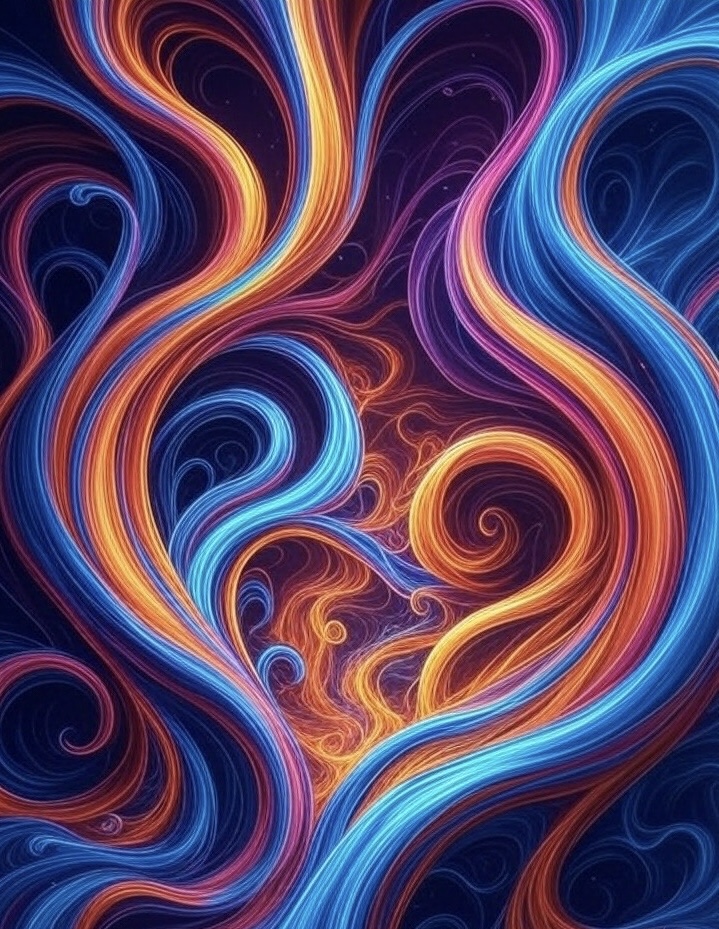
Aesthetically, NeuralRotica’s work is a mesmerizing blend of form and function. Abstract compositions, reminiscent of neural networks or cultural currents, swirl with vibrant colors and textures that evoke the emotional and social layers of their themes. This aesthetic serves as a bridge between the intellectual and the visceral, merging psychology, neuroscience, and beauty to create pieces that engage both mind and heart. The result is an immersive experience that lingers, rewiring how viewers perceive and interact with the world. By embedding scientific and philosophical insights into their art, NeuralRotica answers the unasked, showing how aesthetics can serve as a neural catalyst, enhancing our capacity for empathy and social connection.
On X, NeuralRotica extends this dialogue with posts like “The Art of Grey” (December 29, 2024), which challenges binary thinking, and “Art on Art” (June 12, 2024), which reflects on creative expression itself. These digital fragments complement the blog’s deeper explorations, creating a dynamic presence that invites ongoing engagement. The artist’s anonymity, shrouded in their pseudonym, amplifies the universality of their message, letting the work speak louder than the individual. This choice underscores NeuralRotica’s focus on ideas over ego, aligning with their mission to foster collective growth.
A single X post from April 2025, where a user linked NeuralRotica to neurotechnology like Neuralink, hints at a technological undercurrent in their work. While their content does not explicitly confirm this, the speculation reflects NeuralRotica’s forward-thinking ethos. Their engagement with neuroscience suggests an awareness of technology’s role in shaping human potential, yet their focus remains on the human element—how we think, feel, and connect. This tension between technology and humanity is part of the unasked question, with NeuralRotica’s art proposing that technology, when paired with art, can enhance rather than supplant our emotional and social capacities.
NeuralRotica’s ultimate impact lies in its ability to reshape the contemporary art landscape, creating a space where intellect, emotion, and social awareness converge. Their work is a call to action, urging viewers to question, adapt, and evolve. By pushing boundaries and embracing vulnerability, NeuralRotica not only challenges conventional perspectives but also lays the groundwork for a more empathetic and interconnected society. Their art answers the question no one knows to ask by demonstrating that art can be a neural bridge, rewiring our minds to foster adaptability, empathy, and unity in an ever-changing world. As we navigate the complexities of technology, culture, and humanity, NeuralRotica stands as a visionary guide, illuminating the path toward a future where art transforms not just how we see, but how we live.
In the theater of human interaction, some individuals move through life with a peculiar grace—a performance so seamless it’s almost reptilian. These are the “lizard people,” not shape-shifting extraterrestrials, but a metaphor for those who lack self-awareness, wear masks to navigate the world, and mimic others to hide their inauthenticity. Their behavior, often deceptive, slithers through social spaces, leaving others unsettled yet captivated. This article explores their existence—how they operate, why they evade self-reflection, and the impact of their chameleon-like nature.
The Mask as Second Skin
Lizard people are masters of disguise, not because they’re malicious, but because they’ve learned to survive by blending in. Their masks are crafted from observation, stitched together from the mannerisms, speech patterns, and emotional displays of those around them. They might adopt a colleague’s boisterous laugh, a friend’s empathetic head-tilt, or the confident swagger of a social media star. These aren’t authentic expressions but borrowed costumes, worn to fit the scene.
Without self-awareness, they rely on mimicry. Lacking a clear sense of who they are, lizard people use external cues to shape their identity. They’re like actors who’ve forgotten their lines, improvising based on the audience’s reactions. This isn’t just a habit; it’s their way of being.
Deception by Design
Their inauthenticity often veers into deception, though not always with intent to harm. Their lies are more about self-preservation than manipulation. They might exaggerate achievements to match a group’s expectations or feign emotions to avoid standing out. In conversation, they’ll nod knowingly at topics they don’t grasp, parroting buzzwords to seem informed. Their deception is a reflex, a way to keep the mask from slipping.
This behavior can be unnerving. People who excessively mimic others’ gestures or speech often seem less trustworthy, even if they don’t realize it. Lizard people, unaware of their own inauthenticity, don’t see how their actions erode trust. They’re too busy scanning the room for cues, adjusting their performance to stay camouflaged.
The Void of Self-Reflection
What sets lizard people apart is their aversion to self-reflection. Looking inward would mean confronting the emptiness beneath their masks—a terrifying prospect. Instead, they chase external validation, seeking likes, laughs, or nods of approval to fill the void. Social media amplifies this, offering a stage to curate a persona without questioning its truth. They post inspirational quotes they don’t live by, share causes they don’t care about, and mirror the aesthetics of whoever’s trending.
This lack of self-awareness isn’t always deliberate. Some lizard people are shaped by environments that punish authenticity—rigid workplaces, judgmental communities, or families demanding conformity. Over time, they suppress their true selves, replacing them with borrowed traits. Others simply lack the tools for introspection, never learning to question their motives.
The Cost of Camouflage
For all their adaptability, lizard people pay a price. Their relationships, built on facades, often feel hollow. Friends and partners may sense the inauthenticity, pulling away without explaining why. Professionally, their mimicry can backfire when colleagues notice inconsistencies or feel misled. They may thrive in shallow settings, but their performances lead to stress and disconnection.
Their impact on others is complex. In small doses, their mimicry can be charming, even disarming. They’re the life of the party, the coworker who always “gets” the vibe. But over time, their lack of authenticity breeds unease. People crave connection with real selves, not polished imitations. When lizard people dominate a social circle or workplace, they can foster a culture of superficiality where everyone feels pressured to wear masks.
Shedding the Scales
Can lizard people change? It’s possible, but it requires facing facing the discomfort of self-awareness. Therapy, journaling, or honest feedback from trusted friends can help them peel back their layers. The process is slow and painful—like a snake shedding its skin, vulnerable and raw. But with effort, they can discover their own voice, values, and quirks, trading deception for authenticity.
For the rest of us, encountering lizard people reminds us to check our own masks. We all mimic to some degree, adapting to social norms or borrowing traits we admire. The difference lies in intention and awareness. By embracing our flaws and reflecting on our choices, we can avoid slipping into their inauthenticity.
The Reptilian Paradox
Lizard people fascinate because they embody a paradox—they’re everywhere and nowhere, visible yet invisible. Their lack of self-awareness makes them both pitiable and frustrating, deceptive yet oddly sincere in their need to belong. They remind us that authenticity is hard-won, requiring courage to face the mirror and accept what we see. In a world that often rewards performance over truth, their art is a cautionary tale—one that slithers through our lives, daring us to be real.
In the ever-evolving landscape of artificial intelligence, few phenomena are as simultaneously fascinating and unsettling as “AI cringe.” This term encapsulates the visceral discomfort elicited when AI-generated content, particularly videos, attempts to pass itself off as authentic human reality but falls short in ways that are glaringly obvious to the human eye. As AI technologies like text-to-video models and deepfake systems become more sophisticated, the line between reality and fabrication blurs, giving rise to a new kind of cultural artifact: the AI video that strives for realism but betrays its artificiality. To describe this peculiar blend of synthetic ambition and flawed execution, I propose a new term: synthenticity, the paradoxical quality of AI-generated content that seeks to emulate authentic human experience but reveals its constructed nature through uncanny imperfections.
The Anatomy of AI Cringe
AI cringe in videos manifests when the technology’s limitations collide with its aspirations to mimic reality. Unlike text or static images, videos demand a seamless integration of visual, auditory, and temporal elements to convincingly replicate human behavior and environments. When AI attempts this, several telltale flaws often emerge.
Uncanny Visual Artifacts: AI-generated faces may exhibit unnatural movements, such as eyes that don’t blink in sync or mouths that move asynchronously with speech. Backgrounds might waver or morph subtly, defying the laws of physics. For instance, a 2024 viral video purportedly showing a politician giving a speech was debunked when viewers noticed the background trees bending in impossible directions, a hallmark of AI-generated physics gone awry.
Auditory Dissonance: AI-synthesized voices often lack the nuanced cadence, emotional inflection, or environmental context of human speech. A synthetic voice might sound overly polished or robotic, or it might fail to match the lip movements of the speaker, creating a jarring disconnect. In one infamous case, a 2023 deepfake advertisement featured a celebrity endorsing a product with a voice that sounded like it was recorded in a vacuum, devoid of ambient noise or natural reverb.
Narrative Incoherence: AI videos often struggle to maintain logical consistency over time. Characters might change appearance inexplicably, or objects may appear and disappear without explanation. A 2025 social media post showcased an AI-generated vlog where the creator’s shirt changed colors mid-sentence, triggering waves of secondhand embarrassment among viewers who recognized the artifice.
Emotional Flatness: Perhaps the most cringe-inducing aspect is the failure to capture authentic human emotion. AI-generated characters often display exaggerated or misplaced expressions, smiling too broadly during a somber moment or staring blankly when excitement is expected. This emotional misalignment taps into the uncanny valley, where near-human likeness becomes unsettling rather than convincing.
These flaws combine to create a visceral reaction: AI cringe. It’s the awkward laugh, the instinctive wince, or the immediate urge to scroll past when we encounter a video that tries too hard to be real and fails spectacularly. But why does this phenomenon matter, and what does it reveal about our relationship with AI?
Synthenticity – The Quest for Artificial Authenticity
The term synthenticity captures the essence of AI’s attempt to fabricate authenticity while inadvertently exposing its synthetic roots. Derived from “synthetic” and “authenticity,” synthenticity describes content that is designed to pass as genuine but is undermined by its artificial construction. It’s not just about failure; it’s about the tension between ambition and imperfection, where the AI’s earnest mimicry of reality becomes its own undoing.
Synthenticity is particularly pronounced in AI videos because video is a multidimensional medium that demands coherence across sight, sound, and story. Unlike a static deepfake image, which might fool a casual glance, a video must sustain its illusion over time, making flaws more noticeable. The pursuit of synthenticity drives AI developers to push the boundaries of realism, but it also amplifies the cringe when the illusion collapses.
The Cultural Context of AI Cringe
The rise of synthentic AI videos coincides with a broader cultural obsession with authenticity. In an era of curated social media personas and rampant misinformation, audiences crave genuine human connection while remaining hyper-vigilant for signs of deception. AI videos that attempt to pass as reality exploit this desire but often trigger skepticism instead. The cringe arises not just from technical flaws but from the ethical unease of being manipulated, or nearly manipulated, by a machine.
Social media platforms like X have become battlegrounds for synthentic content, where users eagerly call out AI-generated videos for their telltale signs. In 2025, a trending topic emerged as users shared clips of AI videos with captions like “Nice try, but those tanks have six wheels!” or “Why is the flag waving in zero gravity?” These posts reflect a collective delight in exposing synthenticity, turning AI’s failures into a form of entertainment.
Yet, the implications of synthenticity extend beyond amusement. When AI videos are used to deceive, whether in political propaganda, fraudulent advertisements, or fake influencer content, the stakes are higher. A 2024 incident involved an AI-generated video of a public figure making inflammatory statements, which briefly went viral before being debunked. The public’s reaction was a mix of outrage at the deception and cringe at the video’s obvious flaws, such as the figure’s unnaturally stiff gestures. Such cases underscore the dual nature of synthenticity: it’s both a technical curiosity and a societal challenge.
The Geopolitical Cringe of Synthentic Posturing
AI cringe reaches a particularly acute level when countries deploy synthentic videos to project an exaggerated image of strength or military prowess. These attempts to appear tougher than reality often backfire, amplifying the cringe through a combination of technical flaws and transparent bravado. Governments or state-affiliated actors may use AI to fabricate footage of advanced weaponry, synchronized military drills, or grandiose displays of power, only to be undermined by the telltale signs of synthenticity. For example, a 2024 propaganda video from an unnamed nation showcased a fleet of futuristic fighter jets soaring in perfect formation, but viewers quickly noticed the planes’ shadows moving inconsistently with the sun’s position, exposing the video as AI-generated. The result was not intimidation but mockery, as online communities dissected the video’s flaws with gleeful precision.
This geopolitical synthenticity is extra cringy because it reveals a desperate need to compensate for perceived weaknesses. Unlike individual creators who might experiment with AI for fun or profit, state-sponsored videos carry the weight of national pride and credibility. When these videos fail—whether through soldiers marching with unnatural rigidity or tanks that inexplicably levitate—the artificiality undermines the intended message, making the country appear not just technically inept but also insecure. The global audience, attuned to spotting AI artifacts, responds with a mix of amusement and secondhand embarrassment, as the gap between the projected image and reality becomes painfully clear.
The Ethics of Synthenticity
The pursuit of synthenticity raises profound ethical questions. When AI videos are presented as reality, they risk eroding trust in visual media. If a video can be fabricated to show anyone saying or doing anything, how can we trust what we see? This concern is amplified by the accessibility of AI tools, which allow even amateurs to create convincing deepfakes or synthetic vlogs. While some creators disclose their work as AI-generated, others exploit synthenticity for clout, profit, or malice— including state actors seeking to manipulate international perceptions.
To address this, some advocate for watermarking or metadata tagging of AI-generated content to distinguish it from reality. Others argue for media literacy campaigns to teach audiences how to spot synthenticity, from checking for visual artifacts to questioning narrative coherence. On X, users frequently share tips for identifying AI videos, such as looking for inconsistent lighting or unnatural crowd behavior, reflecting a grassroots effort to combat deception.
At the same time, not all synthentic videos are malicious. Some creators use AI to produce satirical or artistic content, embracing the cringe as part of the charm. A 2025 viral video series featured an AI-generated talk show with absurdly exaggerated hosts, deliberately leaning into synthenticity for comedic effect. These cases highlight the potential for AI cringe to be a creative tool rather than a deceptive one, provided the artificiality is transparent.
The Future of Synthenticity
As AI technology advances, the gap between synthenticity and true authenticity will narrow. Future models may overcome current limitations, producing videos that are indistinguishable from reality. Yet, paradoxically, this could amplify AI cringe. As synthetic videos become more convincing, audiences may grow even more sensitive to subtle flaws, much like how high-definition film reveals imperfections invisible in lower resolutions. The uncanny valley may shift but never disappear.
Moreover, the cultural response to synthenticity will evolve. As audiences become savvier at spotting AI-generated content, creators—including governments—may lean into the aesthetic of AI cringe, much like how lo-fi music embraces imperfection. Synthenticity could become a genre in its own right, celebrated for its quirks rather than reviled for its failures.
Closing Thought
AI cringe, embodied in the concept of synthenticity, is more than a fleeting internet phenomenon; it’s a window into the promises and pitfalls of artificial intelligence. The discomfort we feel when watching an AI video masquerade as reality—whether it’s a vlogger with a six-fingered hand, a floating dog, or a nation’s laughably exaggerated military might—reflects both the technology’s ambition and its current limitations. By naming this phenomenon synthenticity, we can better understand its technical, cultural, and ethical dimensions, from the uncanny artifacts that betray AI’s handiwork to the societal implications of fabricated realities.
As AI continues to shape our media landscape, the interplay between synthenticity and authenticity will define how we navigate truth and trust in the digital age. For now, the next time you cringe at a synthetic tank levitating or a leader’s face melting mid-speech, take a moment to appreciate the strange beauty of synthenticity a reminder that even in its failures, AI reveals something profoundly human – our unrelenting desire for the real.



 NeuralRotica