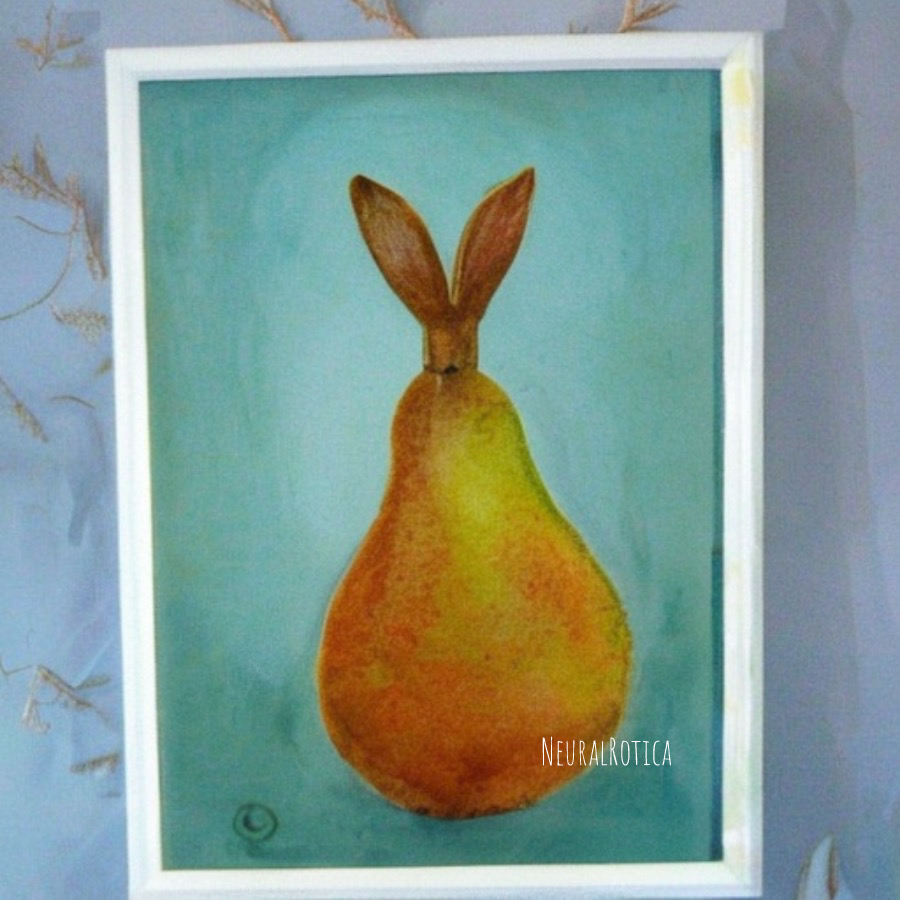
Throughout the annals of art history, certain motifs have persisted as timeless symbols, transcending cultures and epochs. Among these, the pear and the hare stand out as two enigmatic figures that have captivated the imagination of artists for centuries. Individually, they embody distinct meanings and associations, but when brought together in artistic representation, they weave a narrative that speaks to the human experience in profound and unexpected ways.
The Pear: Symbol of Abundance and Sensuality
The pear, with its voluptuous form and luscious flavor, has long been emblematic of abundance, fertility, and sensuality. Its curvaceous silhouette has been celebrated in still life paintings, where it often takes center stage as a representation of earthly pleasures. From the sumptuous works of Dutch Golden Age painters to the lavish compositions of the Impressionists, the pear has been depicted in various stages of ripeness, its presence evoking a sense of opulence and indulgence.
In addition to its associations with earthly delights, the pear has also been imbued with symbolic significance in religious and mythological contexts. In Christian art, the pear has been used to represent the divine feminine and the Virgin Mary, while in ancient mythology, it has been linked to themes of love and temptation, most notably in the story of Paris and the golden apple.
The Hare: Emblem of Mystery and Vitality
Conversely, the hare has long held a place in art as a symbol of mystery, agility, and vitality. With its fleet-footed nature and enigmatic gaze, the hare has been a recurring motif in folklore and mythology, often embodying the archetype of the trickster or the elusive, otherworldly creature. In many cultures, the hare is associated with the moon, fertility, and the cycle of life and death, its presence invoking a sense of the uncanny and the supernatural.
In art, the hare has been depicted in various guises, from the whimsical renderings of Beatrix Potter to the enigmatic portrayals in the works of Albrecht Dürer and other Old Masters. Its presence in art serves as a reminder of the untamed and instinctual aspects of the natural world, as well as a testament to the enduring allure of the mysterious and the unknown.
The Pear and the Hare: A Duet of Symbolism
When these two evocative symbols are brought together in art, they create a juxtaposition that invites contemplation and interpretation. The pear, with its associations of earthly pleasure and fecundity, finds itself juxtaposed with the hare, a creature of the wild and the otherworldly. This pairing presents a dichotomy of themes—sensuality and mystery, abundance and elusiveness—that invites viewers to explore the complexities of human experience and the interplay between the tangible and the intangible.
In the history of art, the pear and the hare have been depicted together in various contexts, from still life compositions to allegorical tableaux. Each encounter invites viewers to ponder the symbolic resonance of these two elements, as they engage in a visual dialogue that transcends the boundaries of time and culture.
The pear and the hare represent more than mere objects or animals in the realm of art. They stand as enduring symbols that have fascinated and inspired artists across centuries, inviting viewers to delve into the rich tapestry of human experience and the enigmatic interplay of symbolism and representation. As we continue to explore the depths of artistic expression, the pear and the hare will undoubtedly remain fixtures in the ever-evolving narrative of visual storytelling, their timeless allure continuing to captivate and intrigue generations to come.



 NeuralRotica