In the quiet haze of everyday life, we drift. We scroll through endless feeds, chase fleeting highs, and cling to routines that promise security but deliver stagnation. It’s a dream—a comfortable illusion where the world spins on autopilot, and we, mere passengers, convince ourselves that this is all there is. But what if I told you that you’re not awake? That the life you’re living is a scripted slumber, and the real adventure awaits just beyond the veil of your comfort zone?
Picture this: You’re standing at the edge of a vast ocean, waves lapping at your feet, but instead of diving in, you build sandcastles on the shore. They’re intricate, beautiful even, but temporary. A single tide can wipe them away. This is the metaphor for our current trajectories—careers that drain our souls, relationships that feel like obligations, habits that numb our potential. We’re building empires on shifting sands, ignoring the call of the deep blue where true discovery lies.
The signs are everywhere, whispering through the cracks in our illusions. That nagging dissatisfaction at the end of the day, the fleeting envy when you see someone chase their passion, the quiet regret that surfaces in moments of solitude. These aren’t random thoughts; they’re alarms blaring from your subconscious. “Wake up,” they say. “This isn’t the path meant for you.”
But waking up isn’t about destruction; it’s about redirection. It’s the art of pivoting with purpose. Start small: Question your autopilot. Why do you wake up each morning? Is it for a paycheck, or for purpose? Audit your days like a captain charts a new course. What drains you? Cut it loose. What ignites you? Steer toward it.
Consider the stories of those who’ve heeded the call. The corporate executive who traded boardrooms for backpacking trails, discovering joy in simplicity. The artist who silenced doubters to paint her truth, turning vulnerability into a movement. Or the community leader who rallied neighbors to reclaim polluted parks, transforming neglect into green havens. These aren’t fairy tales; they’re proof that change isn’t a leap into the void—it’s a step onto solid ground you’ve always known was there.
Of course, the dream fights back. Fear masquerades as logic: “What if you fail?” “What will others think?” “Isn’t this good enough?” But good enough is the enemy of great. Remember, every groundbreaking invention, every social revolution, began with someone waking up and saying, “No more.” Edison didn’t accept darkness; he illuminated it. Mandela didn’t bow to injustice; he dismantled it. You, too, hold that power.
So, how do you wake up? Begin with awareness. Meditate in the morning light, journal your unfiltered thoughts, seek conversations that challenge your views. Then, act. Set a bold goal—one that scares you a little—and break it into steps. Surround yourself with awakeners: books that expand your mind, people who uplift your spirit, environments that fuel your energy.
Imagine the better path: One where fulfillment isn’t a destination but the journey itself. Where your work aligns with your values, your relationships deepen with authenticity, and your impact ripples outward. It’s not utopia; it’s achievable. The world needs more awakeners—those who choose compassion over convenience, innovation over inertia, growth over the grind.
You’re dreaming right now, but the power to wake is yours. Shake off the slumber, adjust your sails, and chart the course to the life you deserve. The ocean awaits. Dive in.
In a world where information surges like an unrelenting river, the act of pausing—of granting ourselves a silence of moment—becomes a profound philosophical rebellion. We inhabit an era that venerates haste, where quick judgments and fleeting reactions are mistaken for wisdom. Yet, it is in the stillness of deliberate thought that we unearth the depths of existence, where critical thinking becomes not just a skill but a way of being—a path to understanding the self and the cosmos.
The Tyranny of Haste
Our modern existence, woven with the threads of instant connectivity, demands immediacy. Platforms like X amplify this, where a single post can ignite a storm of responses, each vying for dominance in a cacophony of unexamined opinions. We are conditioned to react, to align, to opine—often without questioning the roots of our convictions. Why do we assent so readily? What shadows lurk in the assumptions we embrace? The rush to judge is a betrayal of thought itself, for it sacrifices depth at the altar of speed. As philosopher Søren Kierkegaard warned, “The greatest hazard of all is to lose oneself in the crowd, not daring to be solitary.”
Consider a recent exchange on X, where a loan proposal sparked fervent debate. Statistics were wielded like weapons, anecdotes brandished as truths. Yet, how many paused to interrogate the sources, to weigh the unspoken, or to imagine perspectives beyond the fray? The conversation became a theater of noise, not a sanctuary of insight. To think critically is to resist this current, to step outside the torrent and dwell in the quiet where questions take root.
The Philosophical Pause
Critical thinking, at its core, is a philosophical act—an embrace of the Socratic imperative to know thyself. It demands we linger in the silence of moment, where the mind, unhurried, can probe the essence of things. This pause is not mere hesitation; it is an active communion with doubt, a dialogue with the unknown. To pause is to ask: What is the nature of this belief?What truths lie beyond my immediate perception? In this stillness, we mirror the philosopher’s quest, seeking not just answers but the right questions.
Imagine a simple act: choosing a book. The world endorses a title—its cover gleams, its reviews sing praises, its popularity seems self-evident. But pause. What forces shape this acclaim? Whose voices are silenced in its narrative? Does its truth resonate with the eternal, or is it a fleeting echo of the moment? This act of reflection transforms a mundane choice into a philosophical inquiry, a meditation on meaning itself.
A Framework for Depth
To think critically is to weave philosophy into the fabric of our decisions. Here are three principles to guide this practice:
1. Interrogate Origins: Every idea has a lineage. Ask: Who speaks this truth, and to what end? What biases frame their words? Seek the primary sources, the raw data, the unfiltered reality. As Plato’s cave teaches, shadows are not the substance.
2. Dwell in Ambiguity: The world is not binary, though our minds crave simplicity. Embrace the tension of uncertainty, as Heidegger did in his musings on Being. What lies between the extremes? What possibilities emerge when we resist the urge to resolve?
3. Seek the Unseen: Every narrative conceals as much as it reveals. Like Nietzsche’s call to question the “will to power” behind ideas, ask: What is omitted? Who is marginalized? What countertruths wait in the wings? This requires the humility to admit our partial sight.
The Eternal Reward
To give things more thought is to align with the philosophical tradition of seeking wisdom over certainty. It is to recognize, as Aristotle did, that contemplation is the highest human endeavor. In pausing, we guard against the seduction of dogma, whether from algorithms, crowds, or our own unexamined selves. We cultivate a mind that is not merely reactive but reflective—a mind that sees the world not as a series of surfaces but as a tapestry of depths.
The reward is not just clarity but meaning. In a recent X thread, a user quoted Socrates: “The unexamined life is not worth living.” The words spread rapidly, but how many lingered on their weight? To examine is to pause, to question, to seek the eternal within the ephemeral. It is to transform the mundane into the profound, to find the universal in the particular.
Closinge the Loop – Silence
And so, we return to the silence of moment, where this journey began. In that quiet, we are not merely thinkers but philosophers, wrestling with the mysteries of existence. Each pause is a rebellion against the fleeting, a reclamation of depth in a world that demands haste. To think critically is to honor this silence, to let it guide us toward truths that endure. As we step back into the river of life, let us carry this lesson: in the stillness of a moment, we touch the eternal, and in that depth, we find not just answers, but ourselves.
Amid the intricate web of language and thought, where ideas clash and converge in unexpected ways, resides a dynamic duo: Oxy and Moron. Personified from Greek origins—oxys evoking “sharp” intellect and moros signifying “foolish” simplicity—their fusion spawns the oxymoron, a rhetorical device built on inherent opposition. This partnership, far from superficial trickery, unveils a compelling saga of struggle, discord, and collapse. Through this lens, we probe the core of paradox, illustrating how Oxy’s piercing acuity and Moron’s blunt absurdity reflect our inner turmoil, offering fresh perspectives on mental processes, choices, and life’s precarious equilibrium.
The Birth of an Unlikely Union
Imagine, if you will, a mythical realm where concepts take form as living entities. Oxy emerges as a radiant figure, her edges honed like a blade forged in the fires of intellect. She represents acuity, the piercing insight that cuts through ambiguity to reveal truth. Moron, by contrast, stumbles into the scene as a bumbling shadow, embodying the blunt, unrefined impulses that often lead astray. Alone, Oxy might soar into realms of pure logic, unencumbered by emotion or error. Moron, left to his devices, would wander in circles of senseless repetition, chasing illusions without end.
Their union, however, is no accident. It is the spark of creativity itself. When Oxy and Moron entwine, they create moments of startling beauty: “deafening silence,” where the absence of sound screams louder than any noise; “bittersweet victory,” where triumph is laced with sorrow; “cruel kindness,” where compassion inflicts unintended pain. These oxymorons are not mere wordplay; they are portals into the complexity of reality, capturing the essence of life’s inherent contradictions. In literature, Shakespeare wields them masterfully in Romeo and Juliet, describing love as “a smoke raised with the fume of sighs” or a “feather of lead.” In philosophy, they echo the dialectical tensions of Hegel, where thesis and antithesis collide to birth synthesis.
Yet, this union is fraught with peril. Oxy’s sharpness demands precision, while Moron’s dullness pulls toward chaos. Their plight begins here, in the eternal struggle to maintain equilibrium. As partners, they embody the psychological concept of cognitive dissonance—the mental discomfort arising from holding conflicting beliefs or attitudes. In the human mind, this manifests as the sharp awareness of one’s flaws clashing with foolish denial, leading to a cycle of rationalization and regret.
The Plight of Oxy – Sharpness in Chains
Oxy’s plight is one of unfulfilled potential, a keen mind trapped in the gravitational pull of folly. She yearns for clarity, for decisions unmarred by impulse. In the realm of human folly, Oxy represents the prefrontal cortex, the seat of executive function that plans, reasons, and foresees consequences. Yet, she is perpetually yoked to Moron, whose whims sabotage her efforts. Consider the entrepreneur who envisions a groundbreaking innovation—Oxy’s sharp vision—only to rush into execution without due diligence, succumbing to Moron’s impulsive shortcuts. The result? A “successful failure,” where initial gains crumble under the weight of overlooked risks.
Psychologically, this plight aligns with the dual-process theory of cognition, proposed by Daniel Kahneman in Thinking, Fast and Slow. Oxy embodies System 2: deliberate, analytical thinking. Moron is System 1: intuitive, automatic responses driven by heuristics and biases. The plight intensifies when Moron dominates, leading to errors like confirmation bias, where sharp evidence is dulled by foolish preconceptions. In everyday life, this manifests as the “wise fool,” someone intellectually gifted yet socially inept, or the “brilliant disaster,” where genius ideas falter due to poor judgment.
Oxy’s suffering is not solitary; it reverberates through society. In politics, leaders promise “peaceful wars” or “honest deception,” sharp rhetoric masking foolish policies. The plight deepens as Oxy grapples with isolation—her acuity alienates her from Moron’s comforting simplicity, leaving her in a state of existential tension. This mirrors the anxiety of high-IQ individuals who, studies suggest, often experience heightened rates of depression due to overanalysis and perceived absurdity in the world.
The Downfall of Moron – Folly’s Inevitable Collapse
If Oxy’s plight is one of restraint, Moron’s downfall is the climax of unchecked indulgence. Moron, the embodiment of dullness, thrives on immediate gratification, oblivious to the sharp edges of reality. He is the id in Freudian terms—raw desire without the superego’s moral blade. Initially, his alliance with Oxy grants him legitimacy; together, they craft illusions that captivate. “Jumbo shrimp” delights the palate of language, “virtual reality” blurs the lines of existence.
But Moron’s downfall arrives when the contradiction implodes. Without Oxy’s guidance, his folly spirals into hubris. Picture the investor chasing “guaranteed risks,” pouring fortunes into volatile schemes, only to face ruin. This is the “tragic comedy” of overconfidence bias, where perceived sharpness is mere illusion. In history, figures like Icarus embody this: sharp ambition (Oxy) paired with foolish disregard (Moron) for warnings, leading to a literal fall from grace.
The downfall accelerates in the digital age, where technology amplifies contradictions. Social media promises “connected isolation,” sharp algorithms feeding Moron’s addictive scrolls. Psychological research from the American Psychological Association highlights how this leads to mental health crises—depression from “happy sadness,” where curated lives mask inner turmoil. Moron’s end is not dramatic but insidious: a slow erosion where folly consumes all, leaving only echoes of what could have been. As Nietzsche warned, “He who fights with monsters should look to it that he himself does not become a monster”—a sharp admonition dulled by Moron’s inevitable embrace of the abyss.
Lessons from the Paradox – Navigating Contradiction
The plight of Oxy and the downfall of Moron teach us that contradiction is not to be resolved but embraced as a spectrum of human experience. In psychology, this aligns with acceptance and commitment therapy (ACT), which encourages acknowledging paradoxes rather than fighting them. By integrating Oxy’s sharpness with Moron’s folly, we cultivate resilience—turning “controlled chaos” into creative innovation.
In leadership, effective decision-makers practice “mindful stupidity,” deliberately incorporating Moron’s intuition to temper Oxy’s overanalysis. Companies like Google foster this through “20% time,” allowing foolish experimentation to yield sharp breakthroughs. Yet, balance is key; tipping too far invites downfall. The art lies in ruthless self-awareness: prioritizing Oxy’s clarity while harnessing Moron’s energy, avoiding the pitfalls of extremes.
On a personal level, reflecting on our own oxymorons—”fearful courage,” “lonely crowds”—fosters empathy. It reminds us that human folly is universal, a shared plight that binds us. By studying these contradictions, we navigate life’s complexities with grace, transforming potential downfall into enlightened growth.
Closing Thought
Within the mosaic of human nature, Oxy and Moron illustrate that genuine insight arises from embracing discord. Their challenges and demise serve not as warnings but as catalysts for introspection. In facing our dualities, we celebrate the keen and the naive alike, crafting a journey where opposition fuels strength. Through this lens of life, we discover not closure, but a rich equilibrium in the elegantly imperfect rhythm of reality.
NeuralRotica is a curator of digital narratives, blending insights with erotic undertones of creativity. Follow for more explorations into the human-machine interface.
In the vast landscape of human cognition, decision-making, and worldview formation, perspectives are often likened to aerial views: altitudes that dictate how the world below is perceived. The journey starts at the 0-foot view: boots on the ground, immersed in the minutiae of daily existence. Then, ascent to the 10,000-foot view occurs, where patterns emerge and the bigger picture takes shape. Next, climb to the 30,000-foot view, a near-stratospheric vantage point where individual details dissolve into grand, interconnected systems. Elevate further to the 50,000-foot view, edging toward the boundary of space, where planetary boundaries fade into cosmic scales. Finally, soar to the 199,000-foot view, nearing suborbital heights, where the solar system and beyond unfold in profound universality. This metaphorical journey is not just poetic; it is a practical framework for understanding navigation of complexity in business, personal growth, science, and society.
This article explores these five levels in depth, drawing on cognitive psychology, systems theory, and real-world examples to illustrate how shifting views can transform approaches to problems. It examines the strengths and pitfalls of each perspective, and discusses strategies for fluidly moving between them. Whether charting corporate strategy as a CEO, seeking inspiration as an artist, or simply trying to make sense of a chaotic world, mastering these altitude adjustments can be a game-changer.
The 0-Foot View – Immersion in the Trenches
At ground level, the 0-foot view, immersion in the thick of it occurs. This is the perspective of the tactile, the immediate, the sensory overload. Imagine standing in a bustling city street – horns blaring, pedestrians jostling, the scent of street food mingling with exhaust fumes. Here, every detail matters because survival and execution depend on it.
From a neurological standpoint, this view engages the brain’s lower-level processing centers, like the amygdala for emotional responses and the sensory cortices for raw input. It is reactive, not reflective. In business, this is the domain of the frontline worker: the salesperson closing a deal, the engineer troubleshooting a glitch, or the chef perfecting a recipe. It is tactical, hands-on, and often exhilarating.
Take, for instance, the world of emergency medicine. A trauma surgeon in the ER operates at 0 feet: assessing vital signs, making split-second incisions, responding to the patient’s immediate needs. There is no room for abstraction; hesitation could mean life or death. Similarly, in personal life, this view dominates during crises: navigating a breakup, handling a child’s tantrum, or fixing a flat tire on a rainy night.
But the 0-foot view has its blind spots. Tunnel vision sets in; myopia occurs, fixating on symptoms rather than causes. Psychologists call this “functional fixedness,” where entrenchment in the details prevents seeing alternative solutions. In historical contexts, think of the soldiers in World War I trenches – focused on the mud, the rats, and the next artillery barrage, unable to grasp the geopolitical machinations driving the war.
To shift upward, intentional detachment is needed. Techniques like mindfulness meditation or journaling can help create mental space, allowing a “zoom out” without losing touch with the ground.
The 10,000-Foot View – Patterns and the Big Picture
Ascending to 10,000 feet, roughly the altitude of a small aircraft, altitude and clarity are gained. The city street below transforms from chaos into a coherent grid: traffic flows like arteries, neighborhoods pulse with activity, and the urban sprawl reveals itself as a living organism.
This mid-level perspective activates higher brain functions, such as the prefrontal cortex, which handles executive planning and pattern recognition. It is strategic rather than tactical, focusing on connections and trends. In cognitive terms, it is where “chunking” is employed: grouping disparate details into meaningful wholes to reduce cognitive load.
In corporate strategy, the 10,000-foot view is the CEO’s perch. Consider Elon Musk’s approach at SpaceX – while engineers toil at 0 feet on rocket components, Musk oversees the integration – how propulsion systems align with mission timelines, regulatory hurdles, and market demands. This view enabled the pivot from single-use rockets to reusable ones, spotting inefficiencies invisible from the ground.
Scientifically, this altitude shines in fields like ecology. A biologist at 0 feet might study a single bee’s behavior, but at 10,000 feet, colony dynamics, pollination networks, and threats like habitat loss are seen. Rachel Carson’s Silent Spring (1962) exemplifies this shift, linking pesticide use (ground-level detail) to broader environmental decline.
Yet, dangers lurk here too. Over-abstraction can lead to detachment: policies that ignore human costs, like corporate layoffs justified by “efficiency metrics.” Socially, this view fueled colonial eras, where empires viewed distant lands as mere resources, overlooking indigenous realities.
Transitioning to this level requires tools like data visualization (e.g., dashboards in business intelligence software) or scenario planning exercises. It is about asking “Why?” instead of “How?”: probing root causes and forecasting outcomes.
The 30,000-Foot View – Systems, Interconnections, and the Horizon
Now, soaring to 30,000 feet, the cruising altitude of commercial jets, the world below blurs into continents, oceans, and weather systems. Individual streets vanish; what emerges are global flows: trade routes, migration patterns, climate fronts. This is the realm of holistic thinking, where everything connects in vast, dynamic systems.
Neurologically, this engages the default mode network, the brain’s “imagination circuit,” fostering creativity and long-term vision. It is less about patterns and more about paradigms: questioning foundational assumptions. Philosophers like Immanuel Kant operated here, redefining reality through critiques of pure reason.
In modern contexts, this view drives paradigm shifts. Climate scientists at 30,000 feet do not just track local weather (10,000 feet) or daily emissions (0 feet); they model global tipping points, like the melting permafrost’s feedback loops.
In technology, visionaries like Sir Tim Berners-Lee invented the World Wide Web from this altitude, envisioning a hyper-connected humanity beyond mere computers or networks. Socially, movements like Black Lives Matter ascend here, linking street-level injustices to systemic racism embedded in institutions worldwide.
However, the 30,000-foot view risks paralysis through overwhelm or ethical dilution: “analysis paralysis” where grand visions stall action. Historically, utopian ideologies (e.g., communism’s global equality) faltered when detached from ground realities, leading to authoritarian overreach.
To inhabit this level, cultivate interdisciplinary thinking: read across fields, engage in systems mapping (e.g., causal loop diagrams), or practice futures thinking via workshops like those from the Institute for the Future.
The 50,000-Foot View – Cosmic Scales and Existential Horizons
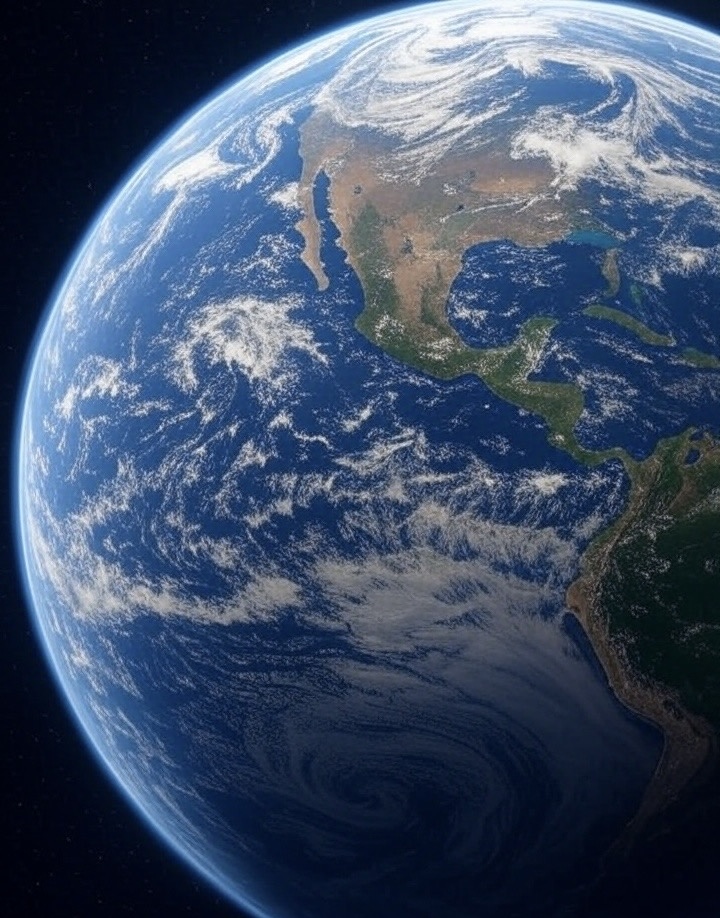
Elevating further to 50,000 feet, approaching the edge of the atmosphere where military reconnaissance aircraft operate, the entire planet appears as a fragile blue marble suspended in the void. National borders dissolve, human endeavors blend into geological epochs, and Earth becomes one node in a vast cosmic web. This perspective transcends terrestrial systems, embracing universal principles, existential questions, and the interplay of galaxies.
Neurologically, this altitude pushes the boundaries of human cognition, activating contemplative networks that ponder infinity, drawing on insights from quantum mechanics to cosmology. It questions not just paradigms but the nature of existence itself – the role of consciousness in the universe, the multiverse hypothesis, or the Fermi paradox asking where extraterrestrial life hides.
In scientific exploration, astrophysicists like Carl Sagan embodied this view in Cosmos (1980), portraying humanity as “star stuff” contemplating the stars, linking daily life to the Big Bang’s echoes. In philosophy, thinkers like Friedrich Nietzsche gazed here, proclaiming the death of God and urging humanity to create meaning in an indifferent cosmos.
Practically, this view informs space policy and long-term survival strategies. Organizations like the European Space Agency model asteroid deflection not for immediate threats (lower views) but for species-level extinction risks over millennia. In business, visionaries at this altitude, such as Jeff Bezos with Blue Origin, envision multi-planetary futures, seeing Earth-bound economies as temporary scaffolds.
Yet, pitfalls abound – existential dread or nihilism can emerge, where individual actions seem insignificant against cosmic timescales. Historical analogs include ancient astronomers overwhelmed by the heavens, leading to fatalistic worldviews.
To access this level, engage in cosmic meditation, study astrophysics, or participate in overview effect simulations (inspired by astronauts’ profound shifts upon seeing Earth from space). Tools like virtual reality planetariums or reading speculative fiction aid in bridging the abstract to the actionable.
The 199,000-Foot View – Universal Unity and Multiversal Potentials
Rising to 199,000 feet, nearing suborbital realms where the curvature of Earth dominates and the thin veil of atmosphere gives way to the vacuum, the solar system emerges as a harmonious dance of planets, asteroids, and comets orbiting a singular star. Galaxies swirl in the distance, and the universe reveals itself as an infinite realm of possibilities, potentially branching into multiverses. This perspective dissolves all boundaries, viewing reality as a unified field where time, space, and consciousness intertwine on scales beyond human lifespan.
Neurologically, this altitude challenges the limits of individual minds, invoking concepts of collective intelligence or simulated realities, perhaps akin to neural networks in advanced AI that model infinite scenarios. It delves into questions of ultimate origins: the Big Bang as one event in an eternal cycle, string theory’s hidden dimensions, or the simulation hypothesis positing existence as code in a higher computation.
In scientific frontiers, physicists like Stephen Hawking exemplified this view in *A Brief History of Time* (1988), exploring black holes not as isolated phenomena but as keys to understanding the fabric of spacetime across the cosmos. In speculative philosophy, figures like David Deutsch pioneer quantum computing from here, envisioning parallel universes where every decision spawns new realities.
Practically, this informs interstellar exploration and theoretical innovations. Initiatives like the Breakthrough Starshot project aim at propelling nanocraft to Alpha Centauri, framing humanity’s future not on one planet or system but across stars. In emerging fields, it drives discussions on post-humanism, where AI and biotechnology merge to extend consciousness into the void.
However, risks intensify: profound alienation or hubris, where overreaching theories ignore empirical grounding, echoing historical alchemists lost in esoteric pursuits. It can foster detachment so extreme that earthly responsibilities fade into irrelevance.
To reach this level, immerse in advanced simulations, quantum philosophy texts, or collaborative think tanks like the Santa Fe Institute. Practices such as lucid dreaming or psychedelic-assisted introspection (under guidance) can simulate the expansion, fostering insights that ripple back to lower altitudes.
Navigating the Altitudes – Fluid Shifts for Optimal Insight
The true power lies not in dwelling at one level but in fluid navigation across all five. Cognitive flexibility, the brain’s ability to switch perspectives, is key, bolstered by practices like neuroplasticity-enhancing activities (e.g., learning new skills or bilingualism).
Consider a case study: NASA’s Apollo program. Engineers at 0 feet designed hardware; program managers at 10,000 feet coordinated launches; visionaries like JFK at 30,000 feet inspired the moonshot as a symbol of human potential. Extending to 50,000 feet, modern successors like the Artemis program frame lunar bases as stepping stones to interstellar exploration; at 199,000 feet, concepts like warp drives envision traversing the galaxy.
In personal development, therapy often facilitates these shifts: from ruminating on daily stressors (0 feet) to identifying life patterns (10,000 feet) to redefining one’s purpose (30,000 feet) to contemplating legacy in the cosmic narrative (50,000 feet) to embracing multiversal self-actualization (199,000 feet).
Challenges arise in mismatched views – e.g., micromanaging bosses stuck at 0 feet stifling innovation, or dreamers lost at 199,000 feet ignoring practicalities. Solutions include “zoom meetings” (literal or figurative) where teams deliberately alternate altitudes.
As global, cosmic, and multiversal challenges like AI ethics, pandemics, interstellar threats, or reality simulations are faced, mastering these shifts is imperative. The 0-foot view grounds in empathy; 10,000 feet in strategy; 30,000 feet in wisdom; 50,000 feet in transcendence; 199,000 feet in unity. By oscillating between them, the full spectrum of human insight is harnessed.
Closing Thought – Embracing the Eternal Ascent
Perspectives are not fixed points, but dynamic trajectories, inviting perpetual motion between the intimate and the infinite. Do not remain anchored eternally to the ground, nor drift without purpose through the clouds, the stars, or the boundless void. Instead, ascend with intention, descend with reflection, and discover equilibrium in the flux. Each altitude offers not merely a vista but a transformative lens, reframing reality and revealing hidden depths of potential. As horizons expand, so too does the capacity for innovation, empathy, and understanding—reminding that the true journey lies in the shifts themselves, ever evolving toward greater enlightenment. What, then, beckons as the next ascent in this unending exploration?
NeuralRotica has long been fascinated by the neural underpinnings of these mindset shifts – how brains rewire to accommodate broader horizons, and what is gained (or lost) in the process.
Creation is often romanticized as a pristine act of bringing something new into existence—a spark of divine inspiration that births beauty, innovation, or meaning. Yet, the act of creation is rarely so tidy. It is a messy, turbulent process, one that frequently demands destruction as its silent partner. To create is to carve space for the new, and that carving often requires tearing down what came before. This interplay between creation and destruction is not a paradox but a profound truth, woven into the fabric of art, nature, and human endeavor. In this exploration, we delve into the intricate dance of creation and destruction, revealing how the act of breaking apart is often the prelude to building anew.
The Inevitability of Destruction in Creation
At its core, creation is transformation. To transform is to alter the state of something, and alteration often involves dismantling the old to make way for the new. Consider the sculptor who chisels away at a block of marble. Each strike of the hammer destroys a fragment of stone, yet it is through this destruction that the form within is revealed. The marble must surrender its excess to become a statue. Similarly, a writer crafting a novel must destroy countless drafts—sentences, paragraphs, even entire chapters—before the story finds its true shape. Creation, then, is not merely the act of adding but also of subtracting, of clearing away to uncover what lies beneath.
This principle extends beyond the arts. In nature, forests burn to ash, yet from those ashes sprout new seedlings, nourished by the nutrients released in the fire. Stars collapse in cataclysmic supernovae, their remnants seeding the cosmos with the elements that form planets and life itself. Destruction is not the enemy of creation but its enabler, a necessary force that clears the stage for new possibilities.
The Psychological Demolition of Creation
For creators, the act of destruction is not only external but internal. To create something truly original, one must often dismantle their own assumptions, habits, and fears. The artist must destroy the safety of the familiar to venture into the unknown. This can be a painful process, as it requires confronting self-doubt, rejecting perfectionism, and letting go of ideas that no longer serve the work.
Consider the musician who scraps an entire album because it feels inauthentic, or the entrepreneur who dismantles a failing business model to pivot toward something untested. These acts of destruction are not failures but acts of courage. They reflect a willingness to let go of what is comfortable or known in pursuit of something greater. The creative process demands this psychological demolition, for it is in the rubble of old ideas that new ones take root.
Destruction as a Cultural Force
On a societal level, creation and destruction are intertwined in the evolution of culture and civilization. Revolutions, both intellectual and political, often arise from the destruction of outdated systems. The Renaissance, a pinnacle of human creativity, emerged from the ashes of the Middle Ages, as old dogmas were challenged and new ideas flourished. The digital age, with its unprecedented technological advancements, required the disruption of analog systems and traditional industries.
Yet, this cultural destruction is not without cost. The loss of traditions, languages, or ways of life can leave scars. The challenge for creators—whether artists, leaders, or innovators—is to navigate this tension, to honor what is worth preserving while making space for the new. Destruction in this context is not reckless but deliberate, a calculated act to clear the path for progress.
The Alchemy of Destruction and Creation
To embrace destruction as part of creation is to engage in a kind of alchemy. It is to recognize that chaos and order are not opposites but collaborators. The painter who slashes a canvas in frustration may find that the accidental mark inspires a bold new direction. The scientist who discards a failed experiment may stumble upon an unexpected discovery. In these moments, destruction becomes a catalyst, transforming the raw material of failure into the gold of innovation.
This alchemical process requires trust—trust in the unknown, in the potential of what lies beyond the wreckage. It demands resilience, for destruction can feel like loss, and creation can feel like risk. Yet, those who master this balance understand that to create is to embrace both the hammer and the chisel, the fire and the seed.
Practical Lessons for Creators
For those seeking to harness the art of creation, the interplay of destruction and creation offers practical lessons:
Embrace Impermanence – Accept that not every idea, draft, or attempt will survive. Letting go of what doesn’t work is not failure but progress.
Seek the Hidden Opportunity – When something falls apart—be it a project, a plan, or a belief—look for the opening it creates. What new possibilities emerge in the space left behind?
Balance Preservation and Progress – Destruction need not be total. Identify what is essential and preserve it, while allowing the rest to evolve or dissolve.
Cultivate Resilience – The emotional toll of destruction can be heavy. Build habits of self-care and reflection to sustain yourself through the creative process.
Trust the Process – Creation is not linear. Trust that destruction, though painful, is often the precursor to breakthroughs.
The Eternal Cycle
The art of creation is not a singular act but a cycle, one that mirrors the rhythms of the universe itself. Just as stars are born and die, just as seasons turn and forests regenerate, so too do our creative endeavors ebb and flow. Destruction clears the way for creation, and creation, in time, gives way to new forms of destruction. This cycle is not to be feared but celebrated, for it is the engine of growth, renewal, and meaning.
To create is to participate in this eternal dance, to wield both the power to build and the courage to break. It is to understand that every act of creation carries within it the seeds of destruction, and every act of destruction holds the promise of something new. In this truth lies the heart of the creative process—not in the avoidance of chaos, but in the fearless embrace of it.
NeuralRotica is a collective of thinkers and creators exploring the intersections of art, technology, and human experience. This article is part of our ongoing series on the forces that shape creativity.
Philosophy has long grappled with questions about existence, consciousness, and the nature of reality. Yet, in our pursuit of understanding, we have overlooked a peculiar and unasked question – What is the shape of a thought in a universe devoid of observers? This question, novel in its framing, invites us to explore the essence of thought itself—its form, its existence, and its potential independence from the minds that typically host it. In this article, I propose an original inquiry into this uncharted territory, weaving together metaphysics, phenomenology, and speculative cosmology to offer a fresh perspective on an unanswered question of philosophy.
The Question Unveiled
To ask about the “shape” of a thought is to probe its fundamental structure or mode of being. We often conceive of thoughts as fleeting, intangible phenomena—mental events bound to a thinking subject. But what if we strip away the subject, the observer, the conscious entity that perceives or generates the thought? In a universe without observers—no humans, no animals, no sentient beings—what form, if any, does a thought take? Does it exist at all, and if so, how might we describe its “shape”—not in a geometric sense, but as a metaphysical or ontological configuration?
This question is distinct from classical philosophical inquiries. It is not about whether a tree falling in a forest makes a sound if no one hears it, nor is it a reformulation of idealism’s concern with mind-dependent reality. Instead, it asks us to imagine thought as a standalone entity, untethered from consciousness, and to speculate on its nature in a cosmos where no one is present to think or perceive. It challenges us to reconsider thought not as a process or product of a mind but as a potential feature of the universe itself.
Framing the Inquiry
To approach this question, we must first clarify what we mean by “thought.” In human experience, thoughts are multifaceted: they can be propositional (e.g., “The sky is blue”), imagistic (a mental picture of a mountain), or emotional (a surge of joy). They are typically private, subjective, and tied to a thinker. But in a universe without observers, we must strip thought of these anthropocentric trappings and consider it in its most abstract form—perhaps as a unit of information, a pattern of relations, or a dynamic process embedded in the fabric of reality.
The “shape” of a thought, in this context, refers to its intrinsic structure or mode of existence. Is it a singular point, a diffuse network, a temporal flow, or something entirely alien to our conceptual frameworks? To explore this, we must venture beyond traditional philosophy and draw on interdisciplinary insights, including physics, information theory, and speculative metaphysics.
A Thought Without a Thinker
Let us imagine a universe at its inception, moments after the Big Bang, before the emergence of life or consciousness. Energy coalesces, particles form, and the laws of physics take hold. Could something akin to a thought exist in this primordial chaos? One might argue that without a mind to host it, thought is impossible. But consider the possibility that thought is not exclusively a product of consciousness. In information theory, for instance, information exists independently of an observer—it is encoded in the arrangement of particles, the spin of electrons, or the entropy of a system. If we define a thought as a structured pattern of information, then the early universe, with its swirling quantum fields and emergent structures, might be teeming with proto-thoughts.
These proto-thoughts would not resemble human cognition. They would lack intentionality, self-awareness, or subjective experience. Yet, they could possess a kind of shape—a configuration defined by their relational properties. For example, the entanglement of particles in quantum mechanics creates correlations that persist across vast distances. Could such correlations constitute the “shape” of a thought, a fleeting nexus of information that exists momentarily before dissolving into the cosmic soup? In this view, the shape of a thought might be a probabilistic, non-local pattern, neither fixed nor permanent, but real nonetheless.
The Role of the Universe as a Canvas
If thoughts can exist without observers, the universe itself becomes their canvas. In a cosmos without sentient beings, the medium for thought might be the physical substrate of reality—fields, particles, or even spacetime. Panpsychism, a philosophical view that posits consciousness as a fundamental property of matter, offers a partial analogy. While panpsychism suggests that all matter has some degree of consciousness, our question requires no such assumption. Instead, we can propose that thought-like structures—patterns of information or relational dynamics—inhere in the universe’s physical processes, independent of consciousness.
Consider a black hole, where information is encoded on its event horizon, according to the holographic principle. This information, compressed into a two-dimensional surface, governs the black hole’s behavior and its interaction with the external universe. Could this encoded information be thought-like, possessing a shape defined by its mathematical structure? If so, the shape of a thought in an observerless universe might be a higher-dimensional configuration, a fractal-like pattern that emerges from the interplay of physical laws.
The Temporal Dimension
Another aspect of a thought’s shape is its temporality. Human thoughts are transient, arising and fading within the stream of consciousness. In an observerless universe, thoughts might also be ephemeral, but their duration could span cosmic timescales. A thought encoded in the cosmic microwave background, for instance, might persist for billions of years, its shape defined by the subtle fluctuations in temperature that ripple across the universe. Alternatively, a thought might be instantaneous, a quantum event that collapses as soon as it forms. The shape of a thought, then, could include its temporal profile—its duration, its rhythm, its place in the unfolding of cosmic history.
Implications for Philosophy
This unasked question forces us to rethink several philosophical assumptions. First, it challenges the anthropocentric bias that ties thought to consciousness. By imagining thoughts as independent entities, we open the door to a more expansive metaphysics, one that sees mind-like properties as woven into the fabric of reality. Second, it invites us to reconsider the nature of existence itself. If thoughts can exist without observers, do they possess a kind of autonomy, a reality as fundamental as matter or energy?
Moreover, this question bridges philosophy and science in a novel way. It suggests that the study of thought’s shape could intersect with cosmology, quantum mechanics, and information theory, offering a new interdisciplinary frontier. For instance, could we develop a mathematical model of a thought’s shape, akin to the wave functions of quantum particles? Such a model might describe thoughts as emergent properties of complex systems, their shapes determined by the underlying dynamics of the universe.
A Speculative Answer
While the question is unanswered—and perhaps unanswerable in a definitive sense—we can offer a speculative response. In a universe without observers, the shape of a thought is a dynamic, relational pattern, a fleeting configuration of information embedded in the physical processes of the cosmos. It is neither mental nor material in the way we understand those terms but exists as a hybrid phenomenon, a ripple in the fabric of reality. Its shape is not fixed but mutable, shaped by the interplay of forces, fields, and structures that define the universe’s evolution.
This answer is not final but an invitation to further inquiry. By asking what the shape of a thought is in an observerless universe, we uncover a new dimension of philosophical exploration—one that stretches our understanding of thought, existence, and the cosmos itself.
Closing Thought
The question of the shape of a thought in a universe without observers is a genuinely new philosophical puzzle, unaddressed by the canons of Western or Eastern thought. It pushes us to imagine thought as a cosmic phenomenon, unbound by the limits of consciousness, and to grapple with its form in a reality devoid of perceivers. While we may never fully grasp the shape of such a thought, the act of asking this question expands the horizons of philosophy, inviting us to see the universe not just as a stage for life and mind but as a vast, enigmatic tapestry of thought-like forms, shimmering in the absence of anyone to witness them.
In the theater of human interaction, some individuals move through life with a peculiar grace—a performance so seamless it’s almost reptilian. These are the “lizard people,” not shape-shifting extraterrestrials, but a metaphor for those who lack self-awareness, wear masks to navigate the world, and mimic others to hide their inauthenticity. Their behavior, often deceptive, slithers through social spaces, leaving others unsettled yet captivated. This article explores their existence—how they operate, why they evade self-reflection, and the impact of their chameleon-like nature.
The Mask as Second Skin
Lizard people are masters of disguise, not because they’re malicious, but because they’ve learned to survive by blending in. Their masks are crafted from observation, stitched together from the mannerisms, speech patterns, and emotional displays of those around them. They might adopt a colleague’s boisterous laugh, a friend’s empathetic head-tilt, or the confident swagger of a social media star. These aren’t authentic expressions but borrowed costumes, worn to fit the scene.
Without self-awareness, they rely on mimicry. Lacking a clear sense of who they are, lizard people use external cues to shape their identity. They’re like actors who’ve forgotten their lines, improvising based on the audience’s reactions. This isn’t just a habit; it’s their way of being.
Deception by Design
Their inauthenticity often veers into deception, though not always with intent to harm. Their lies are more about self-preservation than manipulation. They might exaggerate achievements to match a group’s expectations or feign emotions to avoid standing out. In conversation, they’ll nod knowingly at topics they don’t grasp, parroting buzzwords to seem informed. Their deception is a reflex, a way to keep the mask from slipping.
This behavior can be unnerving. People who excessively mimic others’ gestures or speech often seem less trustworthy, even if they don’t realize it. Lizard people, unaware of their own inauthenticity, don’t see how their actions erode trust. They’re too busy scanning the room for cues, adjusting their performance to stay camouflaged.
The Void of Self-Reflection
What sets lizard people apart is their aversion to self-reflection. Looking inward would mean confronting the emptiness beneath their masks—a terrifying prospect. Instead, they chase external validation, seeking likes, laughs, or nods of approval to fill the void. Social media amplifies this, offering a stage to curate a persona without questioning its truth. They post inspirational quotes they don’t live by, share causes they don’t care about, and mirror the aesthetics of whoever’s trending.
This lack of self-awareness isn’t always deliberate. Some lizard people are shaped by environments that punish authenticity—rigid workplaces, judgmental communities, or families demanding conformity. Over time, they suppress their true selves, replacing them with borrowed traits. Others simply lack the tools for introspection, never learning to question their motives.
The Cost of Camouflage
For all their adaptability, lizard people pay a price. Their relationships, built on facades, often feel hollow. Friends and partners may sense the inauthenticity, pulling away without explaining why. Professionally, their mimicry can backfire when colleagues notice inconsistencies or feel misled. They may thrive in shallow settings, but their performances lead to stress and disconnection.
Their impact on others is complex. In small doses, their mimicry can be charming, even disarming. They’re the life of the party, the coworker who always “gets” the vibe. But over time, their lack of authenticity breeds unease. People crave connection with real selves, not polished imitations. When lizard people dominate a social circle or workplace, they can foster a culture of superficiality where everyone feels pressured to wear masks.
Shedding the Scales
Can lizard people change? It’s possible, but it requires facing facing the discomfort of self-awareness. Therapy, journaling, or honest feedback from trusted friends can help them peel back their layers. The process is slow and painful—like a snake shedding its skin, vulnerable and raw. But with effort, they can discover their own voice, values, and quirks, trading deception for authenticity.
For the rest of us, encountering lizard people reminds us to check our own masks. We all mimic to some degree, adapting to social norms or borrowing traits we admire. The difference lies in intention and awareness. By embracing our flaws and reflecting on our choices, we can avoid slipping into their inauthenticity.
The Reptilian Paradox
Lizard people fascinate because they embody a paradox—they’re everywhere and nowhere, visible yet invisible. Their lack of self-awareness makes them both pitiable and frustrating, deceptive yet oddly sincere in their need to belong. They remind us that authenticity is hard-won, requiring courage to face the mirror and accept what we see. In a world that often rewards performance over truth, their art is a cautionary tale—one that slithers through our lives, daring us to be real.
The pursuit of living in the moment has long been heralded as a pathway to genuine happiness and fulfillment. Yet, upon deeper philosophical examination, one may argue that this aspiration is fundamentally impossible. Our intricate relationship with time, memory, and consciousness complicates our ability to fully inhabit the present moment.
The Nature of Time
Time is a relentless, linear force that flows in one direction, moving from past to present to future. This continuum is not merely a backdrop to our lives but a dynamic process that shapes our very experience. The speed at which this continuum unfolds adds to the challenge of seizing the present moment. Each tick of the clock propels us into what is next, rendering the present fleeting and transient. Our cognitive architecture is designed to process experiences through the dual lenses of memory and anticipation. The past shapes our understanding of the present, while the future ignites our hopes and fears. As such, the present moment becomes a mere intersection of these two vast temporal realms.
Philosophers like Henri Bergson have posited that time is not merely a series of discrete moments but a fluid continuum. The very act of trying to seize the present transforms it into an object of thought, pulling us back into a cycle of reflection and projection. When we attempt to focus solely on “now,” we paradoxically engage with both our memories and our anticipations, diluting the authenticity of the moment we wish to inhabit.
Memory and Consciousness
Memory plays a critical role in our experience of time. Each moment we perceive is filtered through our individual histories and mental frameworks. Our memories are not static but dynamic, subject to distortion and reinterpretation. The act of remembering a moment alters our perception of it, often leading us to view past experiences with a sense of longing or regret. As we recall, we are drawn away from the present and into a narrative constructed from our selective memories.
Moreover, consciousness itself is a complex interplay of past experiences and future aspirations. Cognitive scientists suggest that our minds are perpetually engaged in a process of prediction, using past data to anticipate future outcomes. This anticipatory nature of consciousness means that even when we strive to be present, our thoughts frequently wander to what came before or what lies ahead. The relentless speed of the time continuum further complicates this relationship, as each moment slips away before we can fully grasp it.
The Illusion of Presence
The modern emphasis on mindfulness encourages the practice of anchoring oneself in the present through meditation, breathing exercises, and sensory awareness. While these practices can provide temporary relief from the chaos of existence, they do not eliminate the inherent tension between past and future. Instead, they might offer a fleeting respite from the incessant flow of thoughts and emotions that arise from our temporal experience.
Furthermore, the pursuit of “living in the moment” can create an illusion of presence. We may find ourselves obsessively trying to capture experiences through photographs, social media posts, or journaling, transforming them into commodities that exist outside of our lived experience. In this way, the very act of documenting the present can draw us away from it, as we become preoccupied with how we will remember it later.
Embracing the Paradox
If living in the present is indeed an unattainable ideal, what remains for us? Rather than striving for this elusive state, we might consider embracing the paradox of our temporal existence. Accepting that our experiences are colored by both memory and anticipation can cultivate a more nuanced appreciation of each moment.
Instead of attempting to eliminate thoughts of the past and future, we can learn to engage with them. Acknowledge the influence of your history while remaining open to the possibilities of the future. By fostering a compassionate awareness of our thoughts and feelings, we can find a sense of balance that honors our full human experience.
Closing Thought
The quest to live fully in the present may be a noble endeavor, yet the complexities of time, memory, and consciousness reveal its inherent impossibility. Recognizing this paradox can liberate us from the pressure to achieve an idealized state of presence. Instead, we can strive for a deeper understanding of our relationship with time, embracing both the beauty and complexity of our existence. In this way, we may find peace not in the act of living solely in the present but in the rich and multifaceted nature of our temporal experience.
Often, the sophisticated and the cynical are glorified, yet the art of innocence in naivety stands out as a rare and valuable trait. Naivety, when perceived through a positive lens, can be a profound expression of purity, untainted by the complexities and harshness of modern life. This purity allows individuals to approach the world with an open heart and a fresh perspective, often leading to innovative thinking and profound connections with others.
The Essence of Naivety
Naivety is frequently misunderstood as mere ignorance or a lack of experience. However, true naivety is much more nuanced. It is an openness to experience, a willingness to see the world without the filters of cynicism or prejudice. This form of innocence is not about being uninformed; rather, it’s about maintaining a sense of wonder and possibility in the face of knowledge.
At its core, naivety is rooted in trust and optimism. It is the belief that people are generally good, that opportunities abound, and that problems can be solved with goodwill and creativity. This mindset can be incredibly powerful, fostering an environment where new ideas can flourish and human connections can deepen.
The Beauty of Innocence
The innocence inherent in naivety is a beautiful and transformative force. It allows individuals to engage with the world in a way that is genuine and heartfelt. This can lead to moments of profound creativity and inspiration, as the innocent mind is not constrained by the limitations and doubts that often accompany experience and knowledge.
Artists, in particular, often tap into this sense of innocence to create works that resonate on a deeply emotional level. The ability to see the world with fresh eyes can lead to unique and powerful artistic expressions that touch the hearts of audiences. This is evident in the works of artists like Henri Rousseau, whose naive art style captured the imagination with its simplicity and directness.
The Wisdom in Naivety
While naivety is often associated with youth, it is a trait that can be cultivated and maintained throughout life. This requires a conscious effort to balance the innocence of naivety with the wisdom gained from experience. It is about learning to navigate the complexities of the world without losing sight of the simple truths that underpin our humanity.
There is a profound wisdom in recognizing the value of naivety. It reminds us that not all knowledge is beneficial if it leads to cynicism or despair. Sometimes, the most profound insights come not from what we know, but from what we are willing to believe. This balance between innocence and wisdom allows individuals to remain open to new experiences and ideas, while also navigating life’s challenges with grace and resilience.
Cultivating Naivety in a Modern World
Maintaining a sense of naivety can be challenging. However, there are ways to cultivate this trait:
Practice Mindfulness: Engaging in mindfulness practices can help individuals stay present and appreciate the world around them with a sense of wonder.
Nurture Curiosity: Embrace curiosity and a desire to learn new things. Approach new experiences with an open mind and a willingness to be surprised.
Foster Gratitude: Regularly reflecting on the positive aspects of life can help maintain a sense of optimism and trust in the goodness of the world.
Engage with Art and Nature: Spending time with art and in nature can help reconnect individuals with the beauty and simplicity of the world.
Surround Yourself with Positive Influences: Build a community of like-minded individuals who value innocence and optimism. Positive social interactions can reinforce these traits.
Closing Thought
The art of innocence in naivety is a delicate balance between purity and wisdom. It is a mindset that allows individuals to approach the world with an open heart, fostering creativity, connection, and a profound sense of joy. Often, sophistication and cynicism are valued, but maintaining a sense of naivety can be a radical and transformative act. By embracing this art, we can cultivate a richer, more compassionate, and more vibrant experience of life.
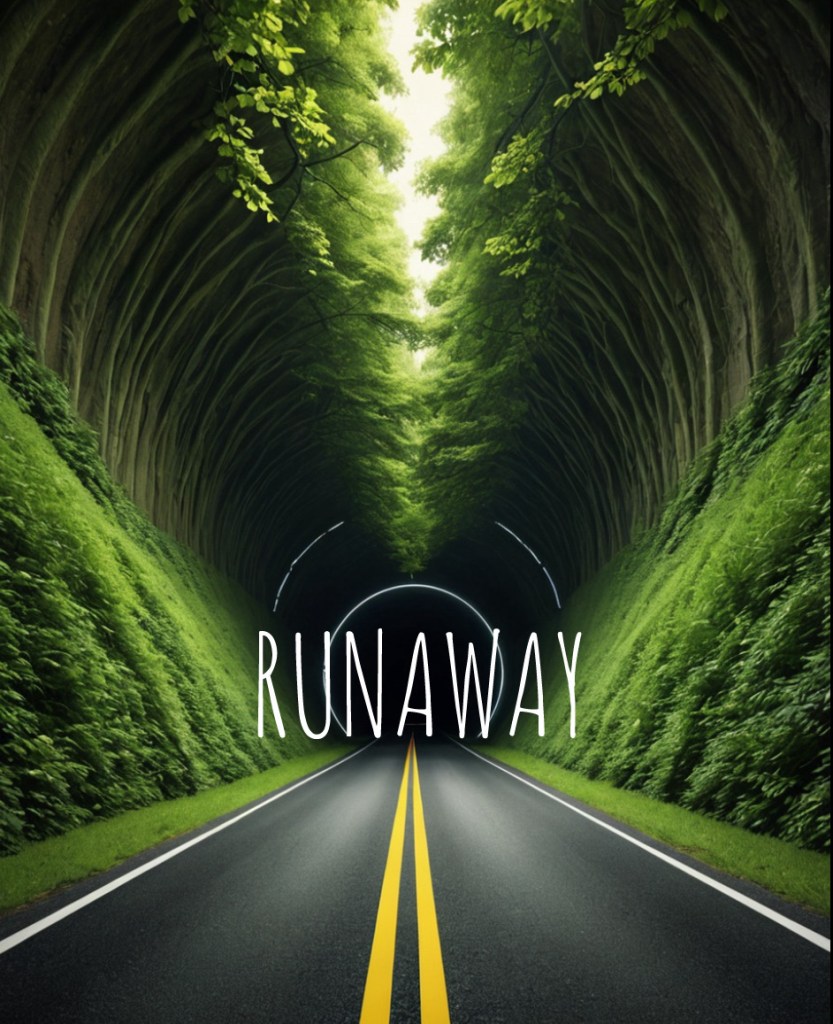
In a world where stability and routine are often prized, the concept of leaving it all behind can be both exhilarating and terrifying. The notion of a “runaway” can evoke images of adventure, freedom, and the quest for self-discovery. Yet, it also brings to mind the challenges and uncertainties that come with such a drastic decision. In this article, we will explore the art of running away — not as an act of cowardice, but as a deliberate, courageous choice to seek a life that aligns more closely with one’s true self.
The Call to Run Away
The urge to run away is a deeply human one, rooted in our desire for change and new experiences. For some, it’s a response to the suffocating pressures of modern life — the endless grind of work, the stifling expectations of society, or the monotony of a life that feels unfulfilling. For others, it’s a quest for something more profound: a search for meaning, self-discovery, or the pursuit of a dream that feels out of reach within the confines of their current existence.
The decision to run away is often preceded by a period of intense introspection. It’s a time when individuals confront their deepest fears, desires, and aspirations. This process can be triggered by a variety of factors, such as a personal crisis, a significant life event, or a growing sense of dissatisfaction with the status quo.
The Art of Preparation
Running away is not an impulsive act; it requires careful planning and preparation. This phase is crucial for ensuring that the decision to leave is sustainable and that the individual is equipped to handle the challenges that lie ahead.
Financial Planning
One of the most critical aspects of preparation is financial planning. Ensuring that you have enough savings to support yourself during the transition period is essential. This might involve creating a budget, cutting unnecessary expenses, and setting up a financial safety net. Additionally, it may be wise to explore alternative income sources, such as freelance work or remote jobs, that can provide financial stability while you navigate your new path.
Emotional Preparation
Leaving everything behind is an emotional journey as much as it is a physical one. It’s important to mentally prepare for the feelings of uncertainty, loneliness, and doubt that may arise. Building a support network of friends, family, or like-minded individuals can provide a sense of community and reassurance during this time. Therapy or counseling can also be beneficial in helping to process emotions and develop coping strategies.
Practical Considerations
Practical considerations, such as housing, transportation, and healthcare, must also be addressed. Researching and securing a place to stay, whether it’s a temporary rental, a hostel, or a long-term living arrangement, is crucial. Ensuring access to healthcare and understanding the legal implications of your move, such as visas or residency requirements, are also important steps.
The Journey Begins
Once the preparations are in place, the journey of running away truly begins. This phase is characterized by exploration, adaptation, and growth. It’s a time to embrace new experiences, challenge oneself, and cultivate a sense of resilience.
Embracing Change
Embracing change is a fundamental aspect of the runaway experience. It involves letting go of old habits, routines, and mindsets that no longer serve you. This can be both liberating and daunting. It’s an opportunity to reinvent yourself, explore new interests, and discover hidden talents. By staying open to new experiences and being willing to step outside your comfort zone, you can unlock a world of possibilities.
Building a New Life
Building a new life from scratch is a daunting task, but it’s also incredibly rewarding. It’s a chance to create a life that aligns with your values, passions, and aspirations. This might involve pursuing a new career, starting a business, or immersing yourself in a different culture. It’s important to set realistic goals and take small, manageable steps towards achieving them. Patience and perseverance are key, as building a new life takes time and effort.
Navigating Challenges
The journey of running away is not without its challenges. There will be moments of doubt, fear, and uncertainty. It’s important to acknowledge these feelings and address them constructively. Developing problem-solving skills, cultivating a positive mindset, and seeking support when needed can help you navigate these challenges. Remember that setbacks are a natural part of the process and can provide valuable lessons for growth and self-improvement.
The Art of Reinvention
At its core, the art of running away is about reinvention. It’s about shedding the layers of who you were to become who you truly want to be. It’s a journey of self-discovery, personal growth, and transformation.
Finding Your True Self
One of the most profound aspects of running away is the opportunity to find your true self. Stripped of the expectations and pressures of your old life, you can explore your identity, values, and passions in a more authentic and uninhibited way. This process often involves deep introspection and self-reflection, as well as the willingness to confront and let go of limiting beliefs and behaviors.
Cultivating New Connections
Running away also presents the chance to form new connections and relationships. These can be incredibly enriching, as they often come with fresh perspectives and different cultural experiences. Engaging with local communities, participating in social events, or joining interest-based groups can help build a new support network. These connections can provide a sense of belonging and enhance your journey of self-discovery.
Embracing Minimalism
Many who choose to run away find that embracing minimalism — the practice of living with fewer material possessions — can be both practical and liberating. By prioritizing experiences over things, you can reduce the burden of physical belongings and create more space for personal growth and freedom. This shift can lead to a more fulfilling and intentional way of life.
The Return: Coming Full Circle
While some may choose to never return to their old lives, others may find that running away is a temporary phase that ultimately leads them back home. However, this return is often marked by profound changes in perspective and self-awareness.
Integrating New Insights
Returning home after a period of running away involves integrating the insights and lessons learned on the journey. This might mean making significant changes to your lifestyle, career, or relationships based on your newfound understanding of yourself and what you truly value. The reintegration process can be challenging, as it requires balancing the wisdom gained from your experience with the practicalities of everyday life.
Sharing Your Story
Sharing your story of running away and the transformation it brought can be a powerful way to inspire and support others who may be contemplating a similar path. Whether through writing, speaking, or simply engaging in conversations, your experiences can provide valuable insights and encouragement to those seeking change. Storytelling also helps in solidifying your own growth and understanding of the journey.
Continuing the Journey
Ultimately, running away is not just a one-time event but a continuous journey. The desire for exploration, growth, and self-discovery doesn’t end once you return home or settle into a new routine. It’s an ongoing process of adapting, learning, and evolving. Embracing this mindset ensures that the spirit of running away — the courage to seek change and pursue authenticity — becomes a permanent aspect of your life.
Closing Thought
The art of running away is a complex and deeply personal journey that requires courage, preparation, and resilience. It’s an act of profound self-love and a commitment to living a life that is true to who you are. Whether it leads to a permanent change or a temporary escape, the experience of running away can provide invaluable insights, foster personal growth, and ultimately lead to a more fulfilling and authentic life.
In a world that often values conformity and stability, the choice to leave it all behind and pursue a different path is a radical and inspiring act. It’s a reminder that we all have the power to redefine our lives, seek new horizons, and discover the limitless potential within ourselves. So, if you ever feel the call to run away, remember that it’s not just about leaving everything behind — it’s about running towards a life that truly resonates with your soul.








 NeuralRotica