By NeuralRotica
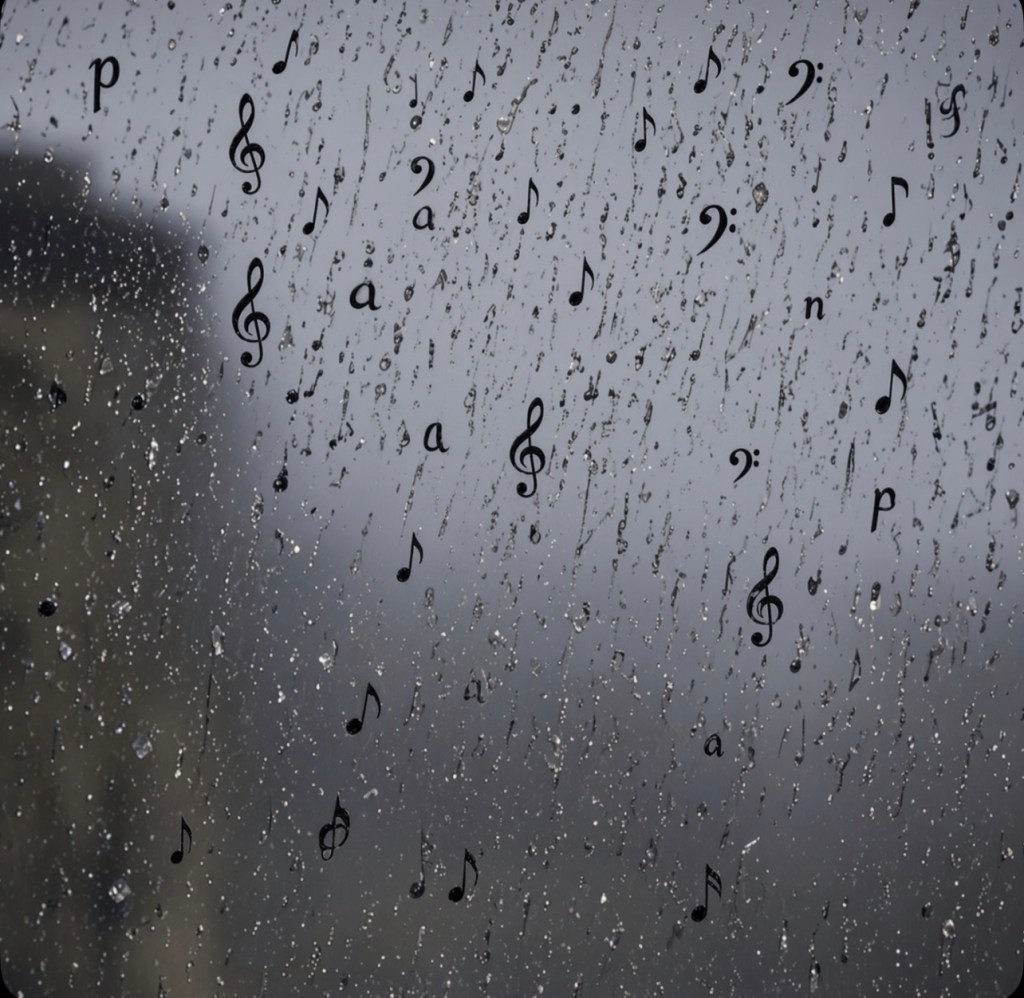
There is a particular kind of quiet that only arrives when rain is falling somewhere just beyond the edge of the song. Not the dramatic thunderstorm that demands attention, not the sparse drizzle that barely registers – just the steady, unbroken murmur of water meeting leaves, glass, and pavement. When that sound is placed beneath a piece of music, something subtle and reliable happens: the listening experience softens, deepens, and becomes more inhabitable. The combination is not merely pleasant. It is soothing in a way that feels almost physiological.
Rain, as background noise, belongs to a family of natural broadband sounds that our nervous systems appear to recognize as non-threatening. Unlike sudden noises or the sharp edges of urban life, continuous rainfall occupies a frequency range that masks smaller distractions without itself becoming a distraction. It is close enough to white noise to steady attention, yet textured enough to avoid the sterile flatness of pure electronic static. When music is added on top, the rain does not compete; it cushions. The melody and rhythm sit inside a gentle acoustic envelope, as if the song has been moved from a bright room into a dimly lit one with the windows open.
This layering changes the emotional temperature of the music. A bright pop track loses some of its insistence and gains atmosphere. An ambient piece becomes almost tactile. Even sparse instrumental work – piano, strings, soft electronics acquires a sense of place. The rain supplies continuity where the composition leaves space, filling the gaps between notes with something living and impersonal. The result is less like hearing a performance and more like sitting inside a moment that happens to contain both weather and song.
Part of the soothing effect is biological. Steady rainfall tends to lower physiological arousal. Heart rate and breathing often slow in response to such sounds, a pattern observed in studies of nature-based audio environments. Music alone can already modulate mood and attention; when rain is present, the two stimuli appear to reinforce each other. The rain provides a low-level, predictable signal that the environment is safe and unchanging, while the music supplies emotional narrative and structure. Together they create a dual pathway into calm: one rooted in sensory continuity, the other in aesthetic engagement.
There is also a quieter psychological dimension. Rain has long been associated with introspection, shelter, and the temporary suspension of ordinary demands. Hearing it while listening to music can evoke the feeling of being indoors on a wet afternoon with nowhere particular to be. That association does not require actual weather. The sound alone is often sufficient to trigger a mild version of the same internal shift—toward slower thinking, softer self-judgment, and a willingness to simply stay with the present track a little longer.
How to Add Rain Under Your Music on iPhone
The easiest and cleanest way is Apple’s built-in Background Sounds feature (available since iOS 15 and expanded in later versions, including iOS 26). It is designed precisely for this: continuous ambient audio that can mix under music, podcasts, or videos without needing a second app.
Initial setup (takes under a minute):
1 Open the Settings app.
2. Tap Accessibility.
3. Under the Hearing section, tap Audio & Visual (or Audio/Visual).
4. Tap Background Sounds.
5. Turn on the Background Sounds toggle.
6. Tap Sound and choose Rain (or Rain on Roof for a slightly different texture—both are excellent). The audio file downloads automatically the first time.
7. Turn on Use When Media Is Playing. This is the crucial switch that lets the rain continue underneath Apple Music, Spotify, YouTube Music, or any other audio.
8. Adjust the two volume sliders:
◦ The main Volume controls the rain when it plays alone.
◦ The lower slider (often labeled something like volume while media is playing) sets how loud the rain sits under your music. Keep this one quieter so the song remains the focus.
Quick daily access via Control Center:
• Open Control Center (swipe down from the top-right corner on Face ID models).
• Tap the + (or long-press an empty area) and choose Add a Control.
• Search for and add Background Sounds (found under Hearing Accessibility).
• From then on, simply tap the control to start/stop the rain, or press and hold it to change the sound, adjust volume, or tweak settings on the fly.
Optional refinements available in recent iOS versions include an Equalizer (for warmer “Comfort” tones or crisper “Focus” frequencies), a timer that fades the rain out after a set period, and the ability to keep the sound playing even when the phone is locked.
Once configured, open your music app of choice, start a playlist or album, and the rain will already be there – soft, steady, and unobtrusive. No extra battery-hungry apps required, and it works offline after the initial download.
The balance still matters. Rain that is too loud will swamp the music; music that is too aggressive will fight the rain. Soft electronic, acoustic, lo-fi, neoclassical, and certain forms of jazz respond especially well. High-energy or densely produced tracks can also work when the rain bed is kept gentle.
What ultimately makes the practice soothing is its simplicity and reliability. No special equipment is required beyond the phone already in your pocket. No elaborate ritual is needed. One simply places the two sounds in the same space and allows them to coexist. Over time the pairing becomes familiar enough that the first notes of rain under a favorite song can themselves become a cue for ease – an auditory signal that the pressure of the day is temporarily set aside.
In an era of constant notification and fractured attention, this small act of sonic layering offers a modest form of refuge. The rain does not solve anything. The music does not transform the world. Yet together they create a pocket of continuity in which the nervous system can briefly stand down. That is enough.
Sometimes the most restorative experiences are the ones that ask almost nothing of us except that we listen a little more carefully to what is already falling.
NeuralRotica is a digital alchemist blending AI, storytelling, and the unconventional. Explore more at (https://neuralrotica.com) and join the inner circle for exclusive insights.
”The Rain” by Stu Pferich is available on your favorite platform 21 August https://music.apple.com/us/album/the-rain-single/6799617230