• About
    • Contact

NeuralRotica

  • Lost & Found – A Personal Journey Through the Labyrinth of Self

    April 13th, 2024

    Every individual’s journey is marked by moments of being lost and subsequently found, both metaphorically and literally. These moments, as disorienting as they may be, serve as crucial pivot points, steering us toward deeper self-understanding and unforeseen paths. My personal odyssey through the realms of being lost and found has been both a crucible and a sanctuary, teaching me lessons that are as profound as they are poignant.

    The Labyrinth of Loss

    My story begins in the labyrinth of loss, a maze that I, like many, wandered into unwittingly. This was not just about losing my way in a physical sense, although there were indeed moments of geographical disorientation that mirrored my internal state. More significantly, it was about losing sight of who I was, my purpose, and my place in the world. This loss was not sudden but gradual, like the slow receding of the tide, leaving me stranded on unfamiliar shores.

    The catalysts were manifold: the dissolution of a long-term relationship that had once seemed like my anchor, the dissolution of a career path that I had pursued with single-minded determination, and the slow erosion of self-confidence that followed. Each of these losses, in its own way, contributed to a sense of dislocation, a feeling of being adrift in a sea of uncertainty without a compass.

    The Turning Point

    In the depths of this disorientation, a turning point emerged, as it often does, cloaked in the guise of further adversity. An unexpected health scare jolted me out of my inertia, compelling me to confront my vulnerabilities head-on. It was during this period of forced introspection that the seeds of understanding began to sprout. I realized that being lost was not a permanent state but a transient phase, a necessary detour on the road to self-discovery.

    The Path to Being Found

    The journey from being lost to being found is not a linear one; it is fraught with false starts, backtracks, and moments of doubt. Yet, it is also marked by moments of clarity, serendipity, and profound growth. For me, the path forward involved embracing uncertainty as a catalyst for change. I began to seek out new experiences, to challenge my preconceived notions, and to open myself up to new perspectives.

    With time, I found that the very experiences that had seemed to displace me were, in fact, guiding me toward a more authentic version of myself. I discovered passions I had previously suppressed, strengths I had undervalued, and a resilience I had not known I possessed. Each step forward, no matter how tentative, became a testament to the power of self-belief and the transformative potential of embracing the unknown.

    The Destination – A New Understanding

    Today, I stand at a vantage point where I can look back on my journey through the labyrinth with a sense of gratitude. Being lost taught me the value of being found, not just in a physical sense, but in the deeper, more existential sense of finding one’s place in the world. I have come to understand that being lost is not a sign of weakness but a prerequisite for growth, a call to adventure that invites us to explore the uncharted territories within ourselves.

    In sharing my story, I hope to offer solace to those who currently find themselves wandering in their own labyrinths. Remember, being lost is just the beginning of the story. Each step, each choice, each moment of uncertainty is part of the intricate process of finding your way back to yourself. Trust in the journey, for it is in the wandering that we are truly found.

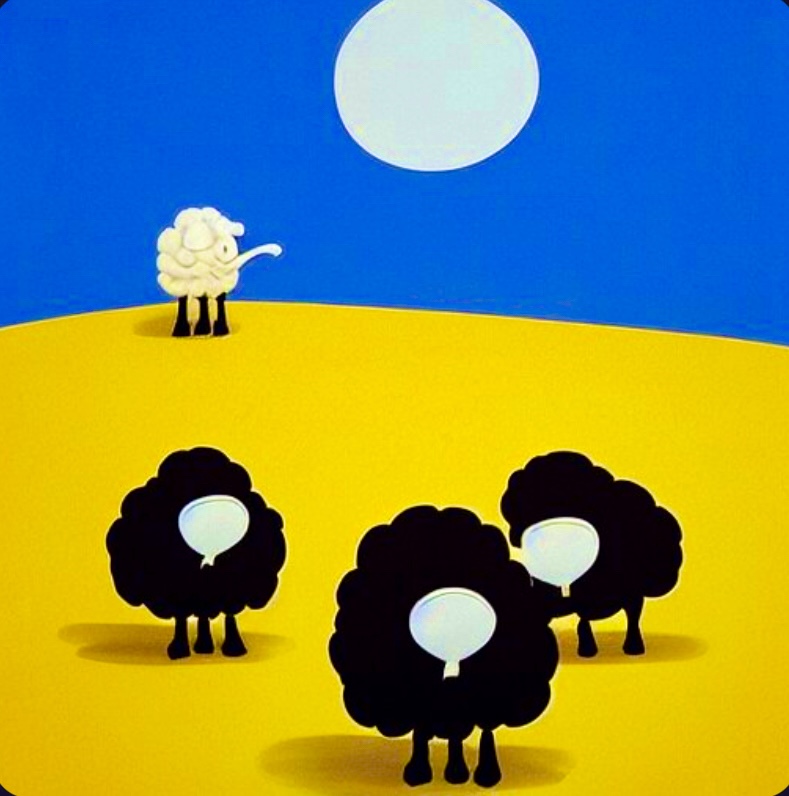
  • Maintaining Authenticity – The Art of Black Sheep

    April 9th, 2024

    In a world where individuality is praised, yet conformity reigns supreme, many find themselves caught in the paradoxical struggle between the desire to stand out and the need to fit in. This balancing act, often unnoticed, leads to what can be termed as “losing your authenticity,” a phenomenon that mirrors the behavior of sheep—creatures known for their strong instinct to follow the herd. This article delves into the depths of this phenomenon, exploring the causes, consequences, and ways to reclaim one’s authentic self.

    The Pull of the Herd

    Human beings, by nature, are social creatures who seek acceptance and belonging within their communities. This intrinsic need drives individuals to adopt behaviors, opinions, and even lifestyles that are deemed acceptable by the majority, often at the expense of their own individuality. The term “The Art of Sheep” symbolizes the skill with which many navigate their social environments, seamlessly blending in without a trace of their authentic selves.

    The Disguise of Conformity

    Conformity can often disguise itself as adaptation or social integration, making it difficult for individuals to recognize when they are sacrificing their authenticity. It manifests in various forms—mimicking popular trends, suppressing unique opinions, or altering one’s behavior to match the expectations of others. Over time, these acts of conformity accumulate, leading to a disconnect from one’s true self.

    The Cost of Losing Authenticity

    The price of this loss is high, impacting mental health, creativity, and personal growth. Individuals may experience feelings of emptiness, dissatisfaction, or a sense that something fundamental is missing from their lives. Furthermore, society as a whole suffers, as the suppression of diverse thoughts, ideas, and innovations leads to a homogenized culture lacking depth and richness.

    The Catalysts of Conformity

    Understanding the forces that drive conformity is crucial. These can range from the explicit pressures of societal norms and expectations to the more subtle influences of social media, where the curated portrayals of lives often present an unrealistic benchmark for success, happiness, and acceptance. Peer pressure, fear of rejection, and the desire for social rewards further fuel the drive to conform.

    Reclaiming Authenticity

    Breaking free from the herd requires conscious effort and courage. It begins with self-awareness—recognizing and acknowledging one’s values, beliefs, and passions. Practicing self-reflection, seeking environments that celebrate individuality, and embracing one’s quirks and differences are steps towards reclaiming authenticity. Moreover, fostering connections with those who appreciate the genuine self can reinforce the value of individuality.

    The Path Less Traveled

    Choosing authenticity over conformity is akin to taking the path less traveled. It is a journey fraught with challenges, including the risk of social isolation, misunderstanding, and criticism. However, it is also a path that leads to self-discovery, genuine relationships, and ultimately, a life lived true to one’s essence.

    Closing Thought

    In the art of sheep, individuals navigate the complex social landscape, often at the expense of their authenticity. While the forces of conformity are strong, recognizing and resisting them is not only an act of self-preservation but a contribution to a more vibrant and diverse society. In the end, the courage to stand apart from the herd, embracing one’s unique identity, is the true art to master.

  • Embracing Solitude – The Transformative Power of Being Alone

    April 9th, 2024

    Exit the rat race, where the cacophony of urban life and the relentless pace of technology often overwhelm the senses, finding solitude can be a rare and profound experience. One of the most enchanting places to encounter this solitude is within the heart of a forest. Alone among ancient trees, where the only sounds are the rustling of leaves and the distant call of wildlife, a person can undergo a deep and transformative experience. This journey explores the multifaceted dimensions of being alone in the forest, examining its psychological impacts, spiritual significance, and the ways it can reshape our understanding of ourselves and the world around us.

    The Psychological Perspective

    From a psychological standpoint, solitude in nature—especially in the dense, living environment of a forest—can have profound effects on the human mind. It offers a break from the constant stimulus of society, allowing for introspection and self-reflection. The natural world, with its cycles and seasons, provides a stark contrast to human concerns, helping to put personal issues into perspective. Studies have shown that time spent alone in nature can reduce stress, lower cortisol levels, and improve mood. The forest acts as a sanctuary, a place where the mind can relax and rejuvenate away from the pressures of everyday life.

    Spiritual Awakening in Solitude

    Many cultures and spiritual traditions recognize the forest as a place of deep spiritual significance, a realm where one can connect with the divine or the essence of the universe. Alone in the forest, surrounded by the timeless beauty of nature, individuals often report feelings of awe and a sense of being part of something greater than themselves. This can lead to profound moments of insight and enlightenment, as the superficial layers of the self peel away to reveal deeper truths. The experience of being alone in the forest can be akin to a spiritual awakening, where the boundaries between the self and the natural world blur, fostering a sense of unity and interconnectedness.

    The Call of the Wild – Rediscovering Our Innate Connection to Nature

    Humans evolved in the lap of nature, and our deep-seated connection to the natural world is undeniable. Being alone in the forest rekindles this ancient bond, reminding us of our place within the broader ecosystem. It’s a powerful antidote to the alienation and disconnection that often characterize modern life. In the silence and solitude of the forest, we can hear the subtle language of nature and rediscover our innate affinity for the wild. This reconnection can be incredibly healing, offering a sense of belonging and grounding in a world that often feels chaotic and unstable.

    The Art of Being Alone

    In the forest, solitude transforms from a state of being alone to an art form. It requires one to be fully present, mindful of the surroundings, and open to the experience. This mindfulness can lead to a heightened awareness of the senses, where every leaf flutter, bird song, and sunbeam becomes a source of joy and wonder. The practice of being alone in the forest can teach us valuable lessons about self-reliance, resilience, and the importance of slowing down. It challenges us to confront our fears and insecurities, leading to personal growth and self-discovery.

    Closing Thought

    The experience of being alone in the forest is a profound journey that can change the way we see ourselves and the world. It offers a unique blend of psychological relief, spiritual awakening, and a deepened connection to nature. This solitude is not about loneliness or isolation; rather, it’s a rich, multisensory experience that nurtures the soul, clears the mind, and revitalizes the spirit. In the embrace of the forest, we find not only solitude but a profound sense of belonging—to the earth, to the web of life, and to the deepest parts of ourselves.

  • Stuck on Stupid – The Art of Repetition Repetition

    April 9th, 2024

    Repetition has long been branded the dim-witted sibling in the family of learning techniques. It’s often dismissed as the hallmark of those unable to grasp more sophisticated methods of mastering a skill or digesting information. However, this scornful view of repetition overlooks its profound utility and the complex cognitive dance it orchestrates. This essay ventures into the heart of repetition, arguing that what is commonly derided as “stuck on stupid” is, in fact, a sublime form of art—a testament to the resilience and adaptability of the human mind.

    The term “stuck on stupid” typically evokes images of a hamster wheel – monotonous, unproductive, and mindlessly repetitive. It’s a phrase uttered with a mix of pity and disdain, aimed at those perceived to be making no progress despite their efforts. Yet, beneath this surface-level judgment lies a rich terrain of cognitive growth and creativity that repetition fosters.

    Firstly, repetition is the bedrock of mastery. From the musician who practices scales daily to the mathematician who revisits complex equations, repetition is not a mere act of memory reinforcement but a deepening of understanding. Each iteration peels back a layer, revealing nuances and interconnections previously unnoticed. This is not stupidity; it’s a deliberate deep dive into the intricacies of a subject or skill, acknowledging that true mastery requires familiarity so intimate it can only be achieved through relentless revisitation.

    Moreover, the art of repetition challenges the very notion of stupidity. It suggests that intelligence is not a static trait but a dynamic process. What begins as a struggle to retain basic facts or execute simple tasks evolves, through repetition, into a fluid and sophisticated command. This transformation underscores the adaptability of the human mind and its capacity to derive complex patterns and insights from what might initially appear mundane or simplistic.

    Critics of repetition often fail to recognize its role in fostering creativity. The repetitive practice provides a stable foundation, freeing the mind to explore more inventive and abstract ideas. When the basics become second nature, mental resources can be allocated to thinking outside the box. Thus, artists, scientists, and thinkers throughout history have relied on the power of repetition not as a crutch but as a catapult into realms of innovation and discovery.

    Furthermore, repetition as a learning strategy embodies a profound philosophical stance on failure and resilience. Each repetition is an acknowledgment of imperfection and a commitment to improvement. This relentless pursuit, far from being a sign of stupidity, is a courageous embrace of human fallibility and a testament to the enduring spirit of inquiry and growth.

    The art of repetition is a nuanced and multifaceted practice that belies the simplistic and derogatory notion of being “stuck on stupid.” It is a testament to the complexity of learning, the depth of mastery, the genesis of creativity, and the resilience of the human spirit. Rather than a sign of intellectual deficiency, repetition is a sophisticated strategy that plays a crucial role in the pursuit of excellence and innovation. As such, it’s time to reevaluate and celebrate the art of repetition, recognizing it as an essential component of the complex tapestry of human learning and achievement.

  • Cultivating a Passion for Growth – Nurturing Your Personal Evolution

    April 8th, 2024

    As the world whirls in a constant dance of transformation, it intriguingly reveals a paradoxical truth: the more it changes, the more it steadfastly remains the same – the concept of personal growth has never been more relevant or necessary. The pursuit of growth, however, is not merely about acquiring new skills or achieving external success. It is about cultivating a deep-seated passion for evolution, both personally and professionally. This journey towards growth is not a destination but a continuous process of becoming the best version of oneself. This article delves into the essence of fostering a passion for growth, offering insights and strategies to nurture this transformative journey.

    Understanding the Nature of Growth

    Growth is an inherently personal and subjective experience, encompassing a wide range of dimensions including intellectual, emotional, spiritual, and physical development. It involves stepping out of one’s comfort zone, challenging existing beliefs, and embracing the unknown. At its core, having a passion for growth means being in a perpetual state of curiosity, seeking to understand more about oneself, others, and the universe.

    The Psychology of Growth

    Psychologists have long studied the factors that drive personal development. Carol Dweck’s concept of a “growth mindset” highlights the importance of embracing challenges, persisting in the face of setbacks, seeing effort as a path to mastery, learning from criticism, and finding lessons and inspiration in the success of others. This mindset is crucial for those passionate about growth, as it enables individuals to view growth as an ongoing process rather than a finite goal.

    Cultivating a Passion for Growth – Embrace Lifelong Learning

    One of the most tangible ways to cultivate a passion for growth is through lifelong learning. This can take many forms, including formal education, self-study, mentorship, and practical experiences. The key is to remain open and curious, seeking to understand new perspectives and knowledge areas.

    Reflect and Reassess

    Regular self-reflection is crucial for growth. This involves taking stock of one’s values, goals, and the progress made towards them. Reflection allows for a deeper understanding of oneself and the identification of areas for improvement. It is also an opportunity to celebrate achievements and reassess goals to ensure they remain aligned with one’s evolving aspirations.

    Challenge Comfort Zones

    Growth often requires stepping out of comfort zones. This means taking risks, trying new things, and embracing the discomfort that comes with uncertainty. It’s about pushing boundaries, not only to achieve external success but to discover more about one’s capacities and resilience.

    Foster Resilience and Adaptability

    A passion for growth is closely linked to resilience and adaptability. The journey is inevitably filled with challenges and setbacks. Cultivating resilience—the ability to bounce back from difficulties—and adaptability—the capacity to adjust to new conditions—ensures that these challenges become stepping stones rather than obstacles.

    Connect and Collaborate

    Growth is not an isolated journey. Engaging with others, sharing experiences, and learning from diverse perspectives can significantly enhance personal development. Collaboration and networking can open new doors and provide insights that are not accessible in solitude.

    The Impact of a Passion for Growth

    Individuals who embrace growth contribute to a positive and dynamic culture in their personal and professional lives. Their openness to change and continuous improvement can inspire others, fostering environments where creativity, innovation, and progress thrive.

    Moreover, a passion for growth leads to a more fulfilling and meaningful life. It allows individuals to live authentically, aligned with their values and purpose. It’s about building a legacy, not just in terms of achievements but in terms of the person one becomes.

    Closing Thought

    Cultivating a passion for growth is a deeply enriching and transformative process. It requires curiosity, resilience, and an openness to change. By embracing lifelong learning, stepping out of comfort zones, and connecting with others, individuals can navigate the journey of personal evolution with purpose and passion. Ultimately, the pursuit of growth is about embracing the journey of becoming, continuously striving to unlock the limitless potential within.

  • The Art of the Possible – Embracing Change for Unprecedented Outcomes

    April 8th, 2024

    In a world where the only constant is change, the timeless adage, “If you always do what you’ve always done, you’ll always get what you’ve always got,” serves as a compelling call to action. This statement is not just a reflection on the cyclical nature of outcomes resulting from unchanged behavior; it is a clarion call for innovation, a challenge to the status quo, and a foundational principle for those who seek to explore the art of the possible.

    The concept of the “art of the possible” encourages us to envision a future unbound by the constraints of current practices and limitations. It is an invitation to imagine what could be, rather than settling for what is. This perspective is crucial not only in fields traditionally associated with creativity, such as the arts and literature, but across all sectors, including technology, business, education, and politics.

    Breaking the Cycle of Repetition

    The first step in exploring the art of the possible is recognizing the cycle of repetition in which many individuals and organizations find themselves trapped. This cycle is characterized by a reliance on familiar processes, fear of failure, and a preference for the status quo over the uncertainty of innovation. However, history is replete with examples of individuals and organizations that have broken free from this cycle, achieving unprecedented success by daring to do differently.

    The Role of Innovation

    Innovation is the engine that drives the art of the possible. It is about looking at problems from new angles, questioning long-held assumptions, and being willing to experiment and take risks. Innovators understand that failure is often a step towards success and that groundbreaking achievements are rarely the result of playing it safe.

    Cultivating a Mindset for the Possible

    To truly embrace the art of the possible, one must cultivate a mindset that is open to change and comfortable with uncertainty. This involves:

    • Curiosity: A genuine desire to learn, explore, and understand the world from different perspectives.
    • Resilience: The ability to bounce back from setbacks and view failure as an opportunity for growth.
    • Collaboration: Recognizing that the greatest achievements are often the result of teamwork and the exchange of ideas.
    • Vision: The ability to see beyond the immediate and imagine what could be.

    Practical Steps Towards the Possible

    1. Challenge Assumptions: Regularly question whether the current way of doing things is still the best way.
    2. Encourage Diversity of Thought: Create environments where different perspectives are valued and considered.
    3. Foster a Culture of Experimentation: Encourage trying new approaches, and view failures as learning opportunities.
    4. Invest in Continuous Learning: Dedicate time and resources to acquiring new skills and knowledge.
    5. Set Bold Goals: Aim for achievements that seem just out of reach to stretch capabilities and drive innovation.

    Closing Thought

    The art of the possible is not just about dreaming big; it’s about making those dreams a reality through concrete actions and a willingness to embrace change. The quote, “If you always do what you’ve always done, you’ll always get what you’ve always got,” serves as a powerful reminder that to achieve different outcomes, we must be willing to do things differently. By fostering a culture of innovation, curiosity, and resilience, individuals and organizations can unlock their full potential and explore the boundless possibilities that await.

  • The Irreplaceable Essence of Human Creativity – Why AI Will Not Supplant Artists

    April 6th, 2024

    In the rapidly evolving landscape of artificial intelligence (AI), there’s a burgeoning discourse around its potential to automate tasks historically deemed the exclusive domain of humans. Among these, the arts—a realm deeply interwoven with human emotion, experience, and subjective expression—have emerged as a particularly poignant battleground in the debate over AI’s expanding role. Despite the impressive advancements in AI that enable it to generate music, literature, and visual art, there are intrinsic qualities inherent to human creativity that AI cannot replicate, ensuring that artists remain irreplaceable at the heart of creative expression.

    The Unquantifiable Nature of Human Experience

    At the core of artistic creation is the human experience—an intricate tapestry of emotions, memories, and sensory experiences. Artists draw upon their personal journeys, translating intangible feelings and thoughts into forms that resonate on a universal level. This deeply personal aspect of artistry, rooted in the subjective experience of being human, is beyond the reach of AI. While AI can mimic styles and patterns, it lacks the capacity to infuse creations with genuine emotions or to draw upon a life lived with all its complexities and nuances.

    The Boundless Realm of Creativity

    Human creativity is inherently boundless, capable of leaps of imagination that transcend the logical and the linear. Artists often venture into the unknown, breaking rules and forging new paths in ways that defy conventional expectations. AI, in contrast, operates within the parameters set by its programming and the data it has been trained on. It can generate content based on existing patterns and correlations, but it lacks the ability to conceptualize entirely new realms of thought or to innovate in ways that have not been previously encoded into its algorithms.

    The Cultural and Contextual Sensitivity

    Art is not created in a vacuum; it is deeply embedded within cultural, social, and historical contexts. Artists are able to navigate these complex waters, drawing upon and contributing to the cultural zeitgeist. Their work can challenge societal norms, reflect upon the human condition, and inspire change. AI, however, struggles with contextual understanding and the nuances of cultural sensitivity. Its creations, while technically proficient, often lack the depth and relevance that come from an artist’s intuitive grasp of their cultural milieu.

    The Dialogue Between Artist and Audience

    Art is a dialogue—a means of communication between the artist and the audience where each piece can evoke different emotions, interpretations, and reactions. This interactive dynamic, where art is both influenced by and influences its viewers or listeners, is uniquely human. The artist’s ability to engage, provoke, and connect with the audience through shared human experiences or emotions is something AI cannot authentically replicate. The essence of this exchange, rooted in human empathy and understanding, remains the exclusive domain of human artists.

    Closing Thought

    While AI continues to make strides in the arts, generating works that can mimic certain aspects of human creativity, it falls short of replacing artists. The essence of art—its capacity to convey the depth of human experience, to break the bounds of imagination, to navigate the intricacies of cultural contexts, and to engage in a meaningful dialogue with humanity—remains inherently human. Artists embody the irreplaceable core of creativity, a testament to the unique and indefinable qualities that define our humanity. As we move forward into a future intertwined with AI, it is imperative to recognize and cherish the invaluable contributions of human artists, ensuring that their irreplaceable role in our cultural landscape is preserved and celebrated.

  • Quantum Key Distribution – Safeguarding Information in the Quantum Age

    April 6th, 2024

    In our digital era, the security of information transmission stands as a paramount concern, not only for governmental bodies and corporations but also for individuals. Traditional encryption methods, though effective against conventional threats, are potentially vulnerable to the computational power of quantum computers. Enter Quantum Key Distribution (QKD), a groundbreaking approach in cryptographic communication that leverages the principles of quantum mechanics to ensure unparalleled security. This article delves into the essence of QKD, exploring its mechanisms, advantages, challenges, and the future it heralds for secure communication.

    The Basics of Quantum Key Distribution

    At its core, QKD is a method for two parties to produce a shared random secret key, which can then be used to encrypt and decrypt messages, ensuring that the content remains secure even if the communication channel is compromised. The uniqueness of QKD lies in its use of quantum mechanics, specifically the phenomena of quantum entanglement and the no-cloning theorem, to facilitate secure communication.

    1. Quantum Entanglement: A state where particles become interconnected such that the state of one (no matter the distance apart) instantaneously affects the state of the other. This property is used in QKD to detect any eavesdropping attempts.
    2. The No-Cloning Theorem: A principle stating that it is impossible to create an identical copy of an arbitrary unknown quantum state. This ensures the originality and uniqueness of the quantum keys used in QKD.

    The Process of Quantum Key Distribution

    The most well-known protocol for QKD is the BB84, developed by Charles Bennett and Gilles Brassard in 1984. The protocol involves the following steps:

    1. Transmission of Quantum Bits (Qubits): The sender, often referred to as Alice, sends a series of qubits to the receiver, Bob. These qubits are encoded in quantum states according to two sets of orthogonal bases.
    2. Basis Selection and Measurement: Bob randomly chooses bases to measure the incoming qubits. After measurement, Bob communicates the basis used for each qubit back to Alice.
    3. Key Sifting: Alice informs Bob which bases were correctly matched. Only the qubits measured with the correct basis are kept, forming the raw key.
    4. Error Correction and Privacy Amplification: The final steps involve correcting errors in the raw key and reducing the partial information an eavesdropper might obtain, resulting in a secure secret key.

    Advantages of Quantum Key Distribution

    • Unconditional Security: The laws of quantum mechanics ensure the security of the key distribution, making it theoretically unbreakable.
    • Eavesdropping Detection: Any attempt to intercept the quantum channel alters the quantum states of the qubits, alerting the communicating parties to potential eavesdropping.
    • Future-Proof: QKD offers a solution to the threat posed by quantum computers to traditional cryptography, ensuring long-term security.

    Challenges and Limitations

    Despite its promising advantages, QKD faces several challenges:

    • Distance Limitations: The efficiency of QKD decreases significantly over long distances due to photon loss in optical fibers or the atmosphere.
    • Technical Complexity: Implementing QKD systems requires sophisticated technology and infrastructure, making it currently impractical for widespread use.
    • High Costs: The specialized equipment and technology necessary for QKD contribute to its high implementation and operational costs.

    The Future of Quantum Key Distribution

    The ongoing advancements in quantum technologies and the increasing threat of quantum computing to traditional encryption methods spotlight the importance of QKD. Research and development efforts are focused on overcoming the current limitations, with significant progress in satellite-based QKD and the development of quantum repeaters to extend the feasible distance for QKD.

    Moreover, the integration of QKD into existing communication infrastructures and the standardization of QKD protocols are crucial steps toward its widespread adoption. As these challenges are addressed, QKD is poised to play a critical role in ensuring the security of our digital future.

    Closing Thought

    Quantum Key Distribution represents a paradigm shift in secure communication, offering a solution that is rooted in the fundamental laws of physics rather than computational complexity. As we stand on the brink of the quantum computing era, the importance of developing and implementing quantum-secure encryption methods like QKD cannot be overstated. While challenges remain, the potential of QKD to revolutionize secure communication is undeniable, heralding a new age of information security in the quantum realm.

  • The Evolution of Spectacle

    April 6th, 2024

    Throughout history, the dynamics of entertainment have often mirrored the socio-economic structures of societies, evolving from the rich watching the poor for amusement, to the modern phenomenon of the less affluent being engrossed in the lives of the wealthy. This transition is not merely a change in preferences or accessibility but reflects deeper shifts in societal norms, power structures, and the very concept of entertainment.

    Historical Spectacles – The Rich Gazing Upon the Poor

    In ancient Rome, the Colosseum served as the epitome of entertainment, where the elite would revel in the spectacles of gladiators, many of whom were slaves, criminals, or the impoverished, fighting to the death. These events were more than mere entertainment; they were demonstrations of power, with the wealthy using the games to reinforce their status and control over the lower classes. Similarly, in medieval Europe, public executions and punishments were attended by all societal strata, but with the aristocracy often having the best seats to witness the suffering of the condemned, again reinforcing a societal hierarchy through spectacle.

    The Shift in Entertainment Dynamics

    The Industrial Revolution and subsequent technological advancements began to alter this dynamic significantly. As literacy rates improved and the middle class grew, there was a surge in the consumption of literature, theater, and later, cinema. While these forms of entertainment were accessible to a wider audience, the content often still revolved around the lives of the elite, suggesting a continued fascination with the wealthy. However, the nature of this consumption was different; it was no longer about watching the poor suffer but rather about aspiring to the wealth and opulence of the rich.

    Modern Entertainment – The Poor Watching the Rich

    Today, this dynamic has evolved into a global culture obsessed with the lives of the wealthy and famous. Reality TV shows, social media, and celebrity news sites allow people from all walks of life to peer into the lifestyles of the rich, often in real-time. This shift is partly due to the democratization of media; with the advent of the internet and smartphones, nearly everyone has access to the lives of the affluent, making it easier for the less wealthy to consume these narratives.

    The Role of Aspiration and Escapism

    Modern fascination with the rich can be attributed to a mixture of aspiration and escapism. Many consume media about the wealthy as a form of escapism, dreaming of a life far removed from their own. For others, it serves as inspiration or a goal to strive towards. This dynamic is complex, as it can both motivate individuals and perpetuate feelings of inadequacy or dissatisfaction with one’s own life.

    Social Media – A New Arena

    The rise of social media has also turned the tables on the traditional spectator. Now, anyone with an interesting story, talent, or lifestyle can attract a following, blurring the lines between the watchers and the watched. This has democratized fame to some extent, but the most popular accounts often still belong to those who are wealthy, further entrenching the dynamic of the less affluent being fascinated by the lives of the rich.

    Closing Thought

    The evolution from the rich watching the poor for entertainment to the poor watching the rich is a reflection of deep-seated societal changes. This transition speaks volumes about human nature, societal structures, and the universal quest for diversion and aspiration. As society continues to evolve, so too will the nature of our entertainments and the dynamics of who watches whom. However, the underlying themes of power, aspiration, and escapism are likely to remain central to our consumption of entertainment, regardless of the form it takes.

  • The Paradox Unboxed – Navigating the Labyrinths of Logic and Existence

    April 5th, 2024

    In the realm of intellectual inquiry, paradoxes serve as profound puzzles that challenge our understanding, forcing us to confront the limitations and contradictions inherent in logic, language, and perception. The essence of a paradox lies in its ability to present a situation or statement that defies intuition, revealing a deeper complexity in seemingly straightforward concepts. By unboxing the nature and implications of paradoxes, we embark on a journey through the labyrinths of human thought, exploring the ways in which these intellectual anomalies influence philosophy, mathematics, science, and everyday reasoning.

    The Nature of Paradoxes

    At its core, a paradox is a statement or phenomenon that, despite sound reasoning from acceptable premises, leads to a conclusion that seems logically unacceptable or self-contradictory. Paradoxes often arise from premises that, taken individually, appear reasonable and true, yet when combined, produce outcomes that challenge our sense of logic and coherence.

    Categories of Paradoxes

    Paradoxes can be broadly classified into several categories, including logical, semantic, and epistemic paradoxes, each illuminating different aspects of contradiction and anomaly.

    • Logical Paradoxes: These paradoxes arise directly from logical systems, often questioning the foundations of logic itself. The famous “Liar Paradox,” where a statement declares itself to be false, challenges the binary nature of truth and falsehood in logic.
    • Semantic Paradoxes: These involve contradictions that stem from language and meaning. For example, the “Barber Paradox” explores the dilemma of a barber who shaves all and only those who do not shave themselves, leading to a contradiction when considering whether the barber shaves himself.
    • Epistemic Paradoxes: These paradoxes deal with knowledge and belief systems. The “Unexpected Hanging Paradox” challenges our understanding of knowledge and prediction, as it involves a prisoner trying to predict the day of an execution that is meant to be a surprise.

    Implications and Applications

    The exploration of paradoxes is not a mere intellectual exercise; it has profound implications for various fields of study:

    • Philosophy: Paradoxes force philosophers to scrutinize the assumptions and principles underlying human thought, ethics, and existence. They often serve as catalysts for philosophical debates and the development of new theories.
    • Mathematics: In mathematics, paradoxes like Russell’s Paradox, which questions the set of all sets that do not contain themselves, have led to significant advancements in logic and set theory, reshaping the foundational principles of the discipline.
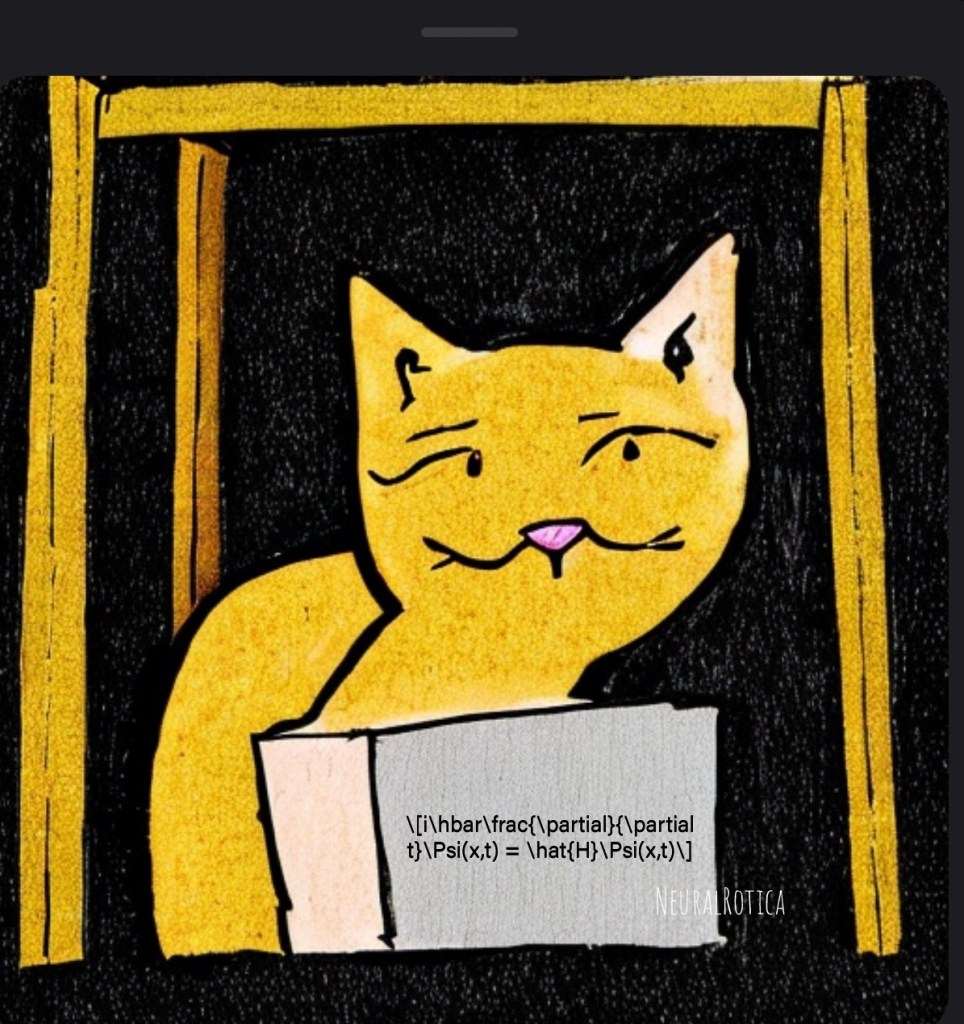
    • Science: Paradoxes in science, such as Schrödinger’s Cat in quantum mechanics, highlight the limitations and the interpretative challenges within our understanding of the physical world, pushing the boundaries of scientific inquiry.

    The Paradox Unboxed – A Path to Deeper Understanding

    The unboxing of paradoxes reveals that at the heart of these puzzles lies an invitation to transcend conventional thinking and embrace the complexity and ambiguity of the world. Paradoxes remind us that certainty and doubt are not opposites but companions in the quest for knowledge and understanding. They encourage us to question, to explore, and to accept the limitations of our reasoning, guiding us toward a more nuanced and comprehensive grasp of reality.

    Closing Thought

    Paradoxes are not mere intellectual curiosities but are fundamental to the advancement of knowledge and understanding. They challenge our preconceptions, push the boundaries of logic and reason, and illuminate the path to deeper insights into the nature of reality, thought, and existence. As we continue to navigate the labyrinths of human inquiry, paradoxes stand as beacons that challenge us to think more critically, creatively, and profoundly about the world and our place within it.

←Previous Page
1 … 8 9 10 11 12 … 40
Next Page→

Blog at WordPress.com.


Loading Comments...
 

    • Subscribe Subscribed
      • NeuralRotica
      • Join 43 other subscribers
      • Already have a WordPress.com account? Log in now.
      • NeuralRotica
      • Subscribe Subscribed
      • Sign up
      • Log in
      • Report this content
      • View site in Reader
      • Manage subscriptions
      • Collapse this bar